
Asvab For Dummies
Jennifer Lawler

Last updated on 2025/05/01
Asvab For Dummies Summary
Jennifer Lawler
Master the ASVAB with expert tips and strategies.


Last updated on 2025/05/01
Asvab For Dummies Summary
Jennifer Lawler
Master the ASVAB with expert tips and strategies.
Description
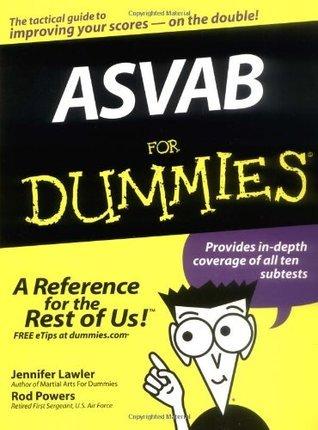

How many pages in Asvab For Dummies?
400 pages

What is the release date for Asvab For Dummies?

"ASVAB For Dummies" by Jennifer Lawler is your comprehensive guide to conquering the Armed Services Vocational Aptitude Battery (ASVAB) test, a crucial stepping stone for anyone aspiring to join the United States military. This engaging, reader-friendly manual demystifies the exam with easy-to-understand explanations, expert test-taking strategies, and practical tips to enhance your study routine, ensuring you approach exam day with confidence. Whether you're a high school student or a career changer, this book equips you with the knowledge and tools necessary to maximize your scores and unlock the doors to your desired military career. Dive in, and take the first step towards achieving your dreams!
Author Jennifer Lawler
Jennifer Lawler is an accomplished author and educator with a diverse background in writing and teaching. With a passion for helping students achieve their academic goals, she has authored several books, including the popular "ASVAB For Dummies," which aims to demystify the Armed Services Vocational Aptitude Battery exam for aspiring military recruits. Lawler’s expertise extends beyond test preparation; she has written extensively on various subjects, showcasing her ability to make complex topics accessible and engaging. Her dedication to education and commitment to empowering individuals through knowledge make her a respected figure in the realm of academic support and guidance.
Asvab For Dummies Summary |Free PDF Download
Asvab For Dummies
Chapter 1 | Putting the ASVAB under a Microscope

In the first chapter of "ASVAB For Dummies," the Armed Services Vocational Aptitude Battery (ASVAB) is closely examined to equip prospective military applicants with essential knowledge about this critical assessment. The ASVAB, consisting of nine or ten tests (depending on the testing format) covering a diverse range of topics from general science to reading comprehension, measures a candidate’s trainability for military roles rather than intelligence. To begin understanding the ASVAB, it is crucial to identify the version being taken, as it varies by testing location and purpose. Most candidates undergo the Computerized Adaptive Testing ASVAB (CAT-ASVAB) at Military Entrance Processing Stations (MEPS), which provides a more dynamic assessment compared to the traditional paper-and-pencil variant available at Mobile Examination Test (MET) sites. The ASVAB comprises ten timed subtests in the computerized format, with Auto & Shop Information divided into subparts, while the paper format has nine. A thorough understanding of each subtest is essential for test-takers to ascertain which areas to focus on for effective study and preparation. Upon receiving ASVAB scores, candidates will encounter multiple score types: raw scores, standard scores, percentile scores, and composite scores. The raw score counts the accurate responses, while standard scores are based on a distribution with a mean of 50. Percentile scores rank a candidate’s performance against peers, and composite scores play a vital role in job qualification within military branches. A crucial metric, the Armed Forces Qualification Test (AFQT) score, is computed using four key subtests: Word Knowledge, Paragraph Comprehension, Arithmetic Reasoning, and Mathematics Knowledge. It is the predominant score used in assessing a candidate’s enlistment eligibility. The AFQT score is calculated meticulously, employing a specific formula to ensure fair and consistent evaluation across all candidates. Each military branch maintains distinct requirements for qualifying AFQT scores, which correlates directly with the potential for enlistment and placement within the service. Prospective recruits may need to retake the ASVAB if their scores don’t meet the qualifying standards for their branch of choice. A strategy for retesting is laid out, indicating the timeframes permitted between tests and the specific criteria established for retaking the ASVAB across different military branches, including the Army, Navy, Air Force, Marine Corps, and Coast Guard. Historically, the ASVAB has evolved since its inception in 1980, transitioning from a singular measurement tool into a complex system with both computerized and traditional formats. Understanding the complete history of the ASVAB illuminates how it has adapted to the changing landscape of military recruitment and training needs. In summary, while preparing for the ASVAB, it is paramount for candidates to familiarize themselves with the various test formats, scoring systems, and relevant military enlistment requirements. This knowledge serves as a foundation for a successful study plan and ultimately aids in achieving deserved military placement aligned with one's career aspirations.


Key Point: Understanding the importance of the AFQT score
Critical Interpretation: The Armed Forces Qualification Test (AFQT) score serves as a crucial indicator of your readiness to enlist in the military, and knowing how to prepare for it can empower you to shape your future. By acknowledging that this score is built on key competencies like Word Knowledge, Paragraph Comprehension, Arithmetic Reasoning, and Mathematics Knowledge, you gain insight into the areas you need to focus on to maximize your potential. This awareness not only motivates you to enhance your skills but also instills a sense of agency and determination; knowing that your hard work can directly influence your destiny transforms the daunting prospect of the ASVAB into an opportunity for growth and self-improvement. Just as in life, where understanding the metrics of success can lead to better decision-making and fulfillment, mastering the AFQT can guide you toward a military career that aligns with your aspirations and capabilities.
Chapter 2 | Knowing What It Takes to Get Your Dream Job
In understanding the pathway to achieving your dream military job, it is important to recognize beyond just the Armed Forces Qualification Test (AFQT) score. While the AFQT score plays a critical role in determining eligibility to enlist, it does not encapsulate the entire picture. Candidates must comprehend how the ASVAB (Armed Services Vocational Aptitude Battery) relates to various roles within the military. Unlike civilian employers, the military predominantly offers entry-level positions where educational background is less critical than aptitude. ASVAB serves as a tool to identify which recruits can successfully complete specialized training programs essential for various military occupations. 1. The ASVAB and Military Role Matching The military branches employ a system of composite scores, often referred to as line scores, to assess candidates’ qualifications for specific jobs. Each branch utilizes these scores in conjunction with other factors such as job availability and physical qualifications to assign recruits to appropriate roles. During enlistment, a recruit's job assignment hinges upon these established line scores, which vary slightly between the different branches. 2. Unique Processes by Military Branch The Army uniquely guarantees specific job roles for all enlistees, while other branches may focus on broader career fields or aptitude areas from which recruits are later assigned jobs. For instance, the Air Force guarantees about 40% of recruits a specific job, whereas the Coast Guard typically assigns new enlistees to general roles for initial service periods before specializing. The Marine Corps and Navy each have their own systems for job assignment, often influenced by recruits' scores. 3. Calculation of Line Scores Line scores are created by synthesizing individual ASVAB standard scores from various subtests: General Science, Arithmetic Reasoning, Auto & Shop Information, Mathematics Knowledge, Mechanical Comprehension, Electronics Information, Assembling Objects, and combined scores from Word Knowledge and Paragraph Comprehension (Verbal Expression). Each branch has its own method for calculating these scores, impacting qualification for specific roles. For example, the Army uses ten distinct line scores, while the Air Force employs an alternative scoring system based on percentile rankings across categories. 4. Understanding Military Terminology When discussing ASVAB scores with a recruiter, it is crucial to become familiar with specific terms: - Standard score: Refers to individual ASVAB subtest scores. - Line score: Combines various standard scores for job qualification. - AFQT score: Derived from English and math subtests to assess eligibility for enlistment. Through this understanding of ASVAB scores and line scores, potential recruits can navigate their military career prospects more effectively, ensuring they aim for roles that align with their aptitudes and aspirations while acknowledging the intricate system that guides military job placements.
Key Point: Understanding the ASVAB as a tool for aligning aptitudes with military roles
Critical Interpretation: Recognizing that the ASVAB isn’t just a test, but a key to unlocking your potential can profoundly inspire you. It emphasizes that success lies not solely in your AFQT score, but in how well you understand yourself and the diverse opportunities available. This realization encourages you to explore your capabilities deeply, ensuring that you pursue paths not merely based on scores or societal expectations, but where your unique skills and interests shine. This perspective can inspire you not only in the military realm but in every aspect of life, fostering a journey of continuous self-discovery and fulfillment as you align your aspirations with your true potential.
Chapter 3 | Getting Acquainted with Test-Taking and Study Techniques
In navigating the complexities of test-taking and studying for the ASVAB, it's essential to adopt strategies that enhance performance and instill confidence. This chapter serves as a comprehensive guide, focusing on critical areas that affect your test outcomes and preparation techniques. 1. Mindset Matters: One of the biggest obstacles to success in testing is the belief in one's inability to perform well. Embracing a military mindset, eliminating phrases like "I can't," allows candidates to overcome mental barriers. Success in testing is often linked to efficient study habits and a positive approach to the exam itself. 2. Choosing Your Test Format: The ASVAB can be administered in two primary formats: paper and computerized. Each format has distinct advantages. The paper version allows for question skipping and note-taking on scratch paper, which can be beneficial in managing time effectively. Conversely, the computerized test offers immediate scoring and adapts the difficulty of questions based on your previous answers, providing a tailored testing experience. Understanding the setup of these formats is vital for making the best choice regarding study methods. 3. Navigating Multiple-Choice Questions: Both ASVAB formats utilize multiple-choice questions. Candidates should approach these carefully by meticulously reading directions and understanding each question. Paying attention to detail, such as the presence of qualifiers in answer choices or the symbols in math questions, greatly influences success. A systematic review of all answer options improves the likelihood of selecting the correct response. 4. Strategic Guessing: When faced with uncertainty, guessing on the ASVAB is not only acceptable but can be advantageous due to the scoring system. Candidates earn points for correct answers while being penalized for incorrect responses. Employing deducing strategies can help narrow choices. Recognizing patterns in answer choices, such as avoiding absolutes or favoring longer responses, can enhance guess accuracy. 5. Effective Study Techniques: Students are encouraged to utilize practice tests not only to familiarize themselves with the exam structure but to identify areas needing improvement. It is beneficial to focus on subtests relevant to personal interests or career aspirations while maximizing study time through longer, uninterrupted sessions. Creating an optimal study environment minimizes distractions, enhancing retention. 6. Last-Minute Preparations: As the test date approaches, the focus should shift to maintaining good physical and mental health. Prioritizing sleep, nutrition, and stress management plays a crucial role in performance. Candidates should arrive early at the testing location to minimize anxiety and ensure timely participation. By effectively implementing these strategies and maintaining a positive mindset, candidates can significantly improve their test-taking capabilities and overall performance on the ASVAB, setting the stage for a successful military career. Preparing thorough, calculated responses and studying with intent will create the best outcomes in the face of testing challenges.
Key Point: Mindset Matters
Critical Interpretation: Imagine stepping into the ASVAB testing room, your heart racing, the weight of expectations lingering in the air. Now, picture yourself dispelling that anxiety by embracing a military mindset, one that champions resilience and determination. No longer are you shackled by thoughts of 'I can't,' but rather empowered by the belief that you can conquer this challenge. This pivotal shift in mindset doesn't just apply to test-taking; it permeates every aspect of your life. Approaching obstacles with a can-do attitude transforms hurdles into stepping stones towards your goals, instilling confidence that spills over into your studies, career aspirations, and personal endeavors. As you face challenges with a positive outlook, you discover the strength to not only persevere but thrive.




Scan to download


Chapter 4 | Word Knowledge
In Chapter 4 of "ASVAB For Dummies," the focus is on the Word Knowledge subtest, which is crucial for successful military communication and eligibility for various military jobs. Understanding and mastering vocabulary is essential not only for taking the ASVAB but also for effective communication in the military environment. 1. Importance of Word Knowledge: Word Knowledge is vital because it corresponds to the ability to understand and communicate ideas clearly. A rich vocabulary aids in completing paperwork, making requests, and functioning effectively in various military roles. The chapter emphasizes that a good vocabulary is crucial for promotion in military careers, as it's evaluated at different levels of training. 2. Question Formats: The ASVAB's Word Knowledge subtest presents two main types of questions. Some ask for direct definitions of words, while others use context sentences where a word is underlined, requiring test-takers to identify the synonym closest in meaning. Understanding question formats can build confidence and test-taking strategies. 3. Strategies for Improving Vocabulary: Building vocabulary is a gradual process that can be enhanced by understanding word structures, including prefixes, suffixes, and root words. Prefixes express negation or quantity (e.g., 'anti-', 'bi-'), while suffixes denote function or relationship (e.g., '-able', '-ful'). Recognizing these components can help decipher unfamiliar words during the test. 4. Root Words and Contextual Clues: Learning common root words enables test-takers to infer meanings even from unknown words. For instance, knowing 'dict' relates to speaking can help deduce meanings of words like 'predicate' or 'dictionary.' Additionally, using context clues can provide insight into unfamiliar words' meanings, making educated guesses based on the surrounding text. 5. Synonyms and Antonyms: Mastering synonyms (words with similar meanings) and antonyms (words with opposite meanings) is crucial. The chapter describes techniques for studying these word relationships, such as using dictionaries and making word lists, which can be particularly beneficial for the ASVAB tests. 6. Active Vocabulary Development: To truly internalize new vocabulary, incorporate new words into sentences and everyday conversations. This approach not only helps memorization but also increases comfort in using unfamiliar terms. 7. Reading as a Tool for Vocabulary Expansion: Regular reading exposes individuals to a variety of words, enhancing vocabulary naturally. Start with materials of moderate difficulty and focus on context to decipher unfamiliar terms. Keeping a list of new words and their meanings collected from reading can prove advantageous. 8. Crosswords and Games as Learning Aids: Engaging in crossword puzzles and word games can make vocabulary learning enjoyable while stimulating the brain. Such activities not only reinforce existing knowledge but also introduce new phrases and synonyms. 9. Phonetic Awareness: Recognizing pronunciation can aid in understanding written vocabulary, especially when encountering unfamiliar words. Becoming aware of common pronunciation rules can prevent confusion and strengthen vocabulary recall. The chapter guides readers through essential techniques for improving vocabulary and succeeding on the ASVAB's Word Knowledge subtest. By incorporating these strategies into study habits and daily interactions, candidates can enhance their communication skills, which are vital for success in military service.
Chapter 5 | Paragraph Comprehension
Chapter 5 of "Asvab For Dummies" focuses on the critical skill of Paragraph Comprehension, which is vital for success on the ASVAB test and essential in military contexts. Understanding the mechanics of this subtest allows candidates to not only perform well on the exam but also thrive in their future military roles. 1. The Paragraph Comprehension subtest measures the ability to read and understand paragraphs, which is significant because military duties often involve deciphering complex documents. Success on this subtest contributes to a critical score known as the AFQT, which determines enlistment eligibility across various military branches. Different military careers require varying degrees of proficiency in reading comprehension, making it crucial for candidates to score well in this area. 2. Test-takers will encounter several short passages, typically one to two paragraphs in length, with accompanying questions that assess various comprehension abilities. Strategies for excelling in this subtest include identifying the main idea, recalling specific details, inferring conclusions, recognizing relationships between ideas, and effectively paraphrasing content. Candidates have a set amount of time—either 13 minutes for the paper version or 22 minutes for the computer version—to read the passages and respond to the questions. 3. Questions on the ASVAB generally fall into four categories: identifying specific information, recognizing the main idea, determining word meanings in context, and drawing logical inferences from the text. For example, candidates may be asked to find a specific fact from the passage or interpret a word’s intended meaning based on its contextual use. This variety necessitates a nuanced understanding of both the text and the question types to achieve the highest score. 4. To enhance reading comprehension skills, candidates are encouraged to adopt several strategies. Regularly engaging with diverse reading materials—such as newspapers and biographies—expanded vocabulary, and practicing paraphrasing passages can significantly improve comprehension and reading speed. Recognizing that confidence can affect reading performance, candidates should build their confidence by summarizing texts and discussing content with peers. 5. On the day of the test, strategic approaches can maximize performance. Candidates should prioritize reading the full passage before addressing the questions and analyze each question carefully. It’s also vital to consider all answer choices before selecting the best one, as nuanced differences can determine correct responses. Avoiding extreme language in answer choices and clarity in understanding questions can further enhance accuracy. Overall, developing strong paragraph comprehension skills is essential for both test success and effective execution of military duties, wherein understanding written directives can profoundly impact performance and accountability.
Chapter 6 | All's Well That Tests Well: Communication Practice Questions
In Chapter 6 of "ASVAB For Dummies," the focus is on enhancing communication skills through practice questions that cover Word Knowledge and Paragraph Comprehension. The tests in this chapter serve as a warm-up, helping readers familiarize themselves with the types of questions they will encounter on the ASVAB, particularly since these sections contribute significantly to the Armed Forces Qualification Test (AFQT) score. The chapter begins with a variety of Word Knowledge practice questions. Each question presents an underlined word for which the reader must select the answer that best aligns with its meaning. This section emphasizes the importance of context and the nuances in word definitions. For example, the word "acclaim" is identified with enthusiastic approval, while "estrange" indicates alienation. Questions guide test-takers to discern meanings not just through synonyms but also through the contextual usage of words within sentences. Knowing prefixes and relationships between words can greatly aid in determining meanings, providing a valuable strategy for test preparation. The following section shifts to Paragraph Comprehension practice questions, requiring careful reading of short passages followed by questions about the content. Each passage presents scenarios that test the reader's ability to extract relevant information and draw logical conclusions. For instance, one passage describes Mrs. Berry's house, where the narrator knocks on the floor, while another contrasts baking as a science versus an art. The questions encourage readers to engage deeply with the text, identifying key details and inferred meanings. As the chapter progresses, various passages cover themes ranging from leadership styles to historical contexts, such as Native American history. The questions encourage responses grounded in the details of each passage, reinforcing the ability to parse essential ideas from written content. For example, understanding that "organizational leaders" establish policies or recognizing the characteristics attributed to "The Toyman," Frank Clarke, requires comprehensive reading and interpretation skills. In summary, this chapter emphasizes the following key principles: 1. Enhanced Vocabulary Knowledge: Understanding word meanings in varied contexts is crucial, and recognizing prefixes can aid in deciphering definitions. 2. Effective Reading Comprehension: Active engagement with reading material and the ability to summarize and infer information from context are essential skills for success on the ASVAB. 3. Strategic Answer Selection: Carefully analyzing question wording helps to identify the best response, whether it requires a synonym, antonym, or understanding the text's implications. 4. Real-World Applications: The examples used in the questions and passages reflect real scenarios—ranging from personal interactions to historical contexts, highlighting the practical utility of strong communication skills. By honing these skills through practice, test-takers can approach the ASVAB with greater confidence, aware of both the format of the questions and the competencies required for their success.

Scan to download
1000+ Book Summaries, 80+ Topics
New titles added every week

Chapter 7 | Mathematics Knowledge and Operations
In Chapter 7 of "ASVAB For Dummies," the focus is on Mathematics Knowledge and Operations, a key subtest that evaluates foundational math skills essential for military enlistment. This section consists of various topics including algebra, geometry, and general arithmetic operations, all presented in a clear and simple manner to facilitate comprehension and learning. Firstly, the chapter underscores the importance of mathematical terminology, with an emphasis on essential concepts such as integers, factors, primes and composites, exponents, bases, square roots, and factorials. Understanding these terms is critical as they often appear in exam questions. For instance, integers are whole numbers both positive and negative including zero. The chapter highlights the characteristics of composite and prime numbers, while also specifying the notation and implication of exponents—essentially a shorthand for repeated multiplication. Next, the text introduces basic operations performed on numbers—addition, subtraction, multiplication, and division—while stressing the concept of inverse operations. It emphasizes the importance of adhering to the order of operations (parentheses, exponents, multiplication and division, and finally addition and subtraction) to avoid common pitfalls in calculations. A vital aspect of the chapter is its practical application; it walks through completing number sequences, which are regularly tested on the ASVAB. The chapter illustrates how to identify patterns in sequences through arithmetic and logic, urging the reader to jot down notes and do mental checks to avoid errors. Fractions are explored in depth, illustrating their relationship to whole numbers through relatable metaphors such as dividing a pizza. The chapter teaches methods for adding and subtracting fractions by finding common denominators and provides step-by-step examples to clarify the process. There are specific techniques outlined for working with multiple fractions, demonstrating how to find a common denominator, and presenting methods to simplify the fractions after operations. The text then covers decimal numbers, showcasing how to perform fundamental operations with decimals as well as converting fractions to decimal format and percentages. It explains how to align decimals for addition and subtraction, and how to manage decimal point placement during multiplication and division. The transformation between these three forms of numbers becomes crucial for solving various ASVAB questions efficiently. The chapter also addresses ratios, rates, and proportions along with their significance in word problems, especially within the context of real-world applications like finance (interest rates), speed, and measurements. It introduces scientific notation, explaining its convenience for dealing with large or small numbers, followed by a brief discussion of square roots, highlighting how to find perfect squares and understanding irrational numbers. In a review of algebra, the chapter clarifies solving for unknowns and maintaining balance in equations. It provides techniques for both one-step and multistep equations, sharing strategies such as combining like terms, isolating variables, and considering the impacts of inverse operations. Furthermore, it guides on solving inequalities, ensuring that the reader understands the implications of operations involving negative values. Lastly, the geometry section summarizes elementary concepts, touching on key figures such as angles, triangles, quadrilaterals, and circles. The chapter provides formulas for calculating perimeter, area, and volume, emphasizing their utility in practical applications. To maximize performance on the Mathematics Knowledge subtest, the chapter concludes with effective test-taking strategies. It encourages engagement with the material through thorough reading, estimating when uncertain, using elimination techniques, and maintaining a calm approach to problem-solving. Overall, Chapter 7 of "ASVAB For Dummies" comprehensively addresses the mathematical principles and operations needed for success on the ASVAB, ensuring that readers are adequately prepared for the exam's challenges.
Chapter 8 | Reasoning with Arithmetic: Math Word Problems
Chapter 8 of "Asvab For Dummies" focuses on solving arithmetic word problems, which are essential for the Arithmetic Reasoning section of the ASVAB. These problems present real-world scenarios that require a solid understanding of arithmetic principles and the ability to reason through various math-based questions. To navigate these word problems effectively, test-takers should adhere to a systematic approach. Firstly, it is crucial to read the entire problem attentively, which helps form a mental image or even a sketch on scratch paper to clarify the situation. Following this, the next step is to determine exactly what the question is asking. This often requires identifying specific clues within the wording, as sometimes the question may not be directly stated. Common clue words can indicate the mathematical operations needed: terms like “sum” or “total” suggest addition, while words like “difference” or “less than” indicate subtraction. Once the question is understood, the next step involves extracting relevant facts from the problem. This means listing all pertinent information and eliminating anything that does not contribute to solving the problem. For instance, if multiple individuals contribute to a total—such as candy bars sold in a fundraiser—only the relevant contributors should be accounted for. After gathering the necessary data, it's time to set up equations and solve the problem mathematically. This may involve translating the problem's context into an equation format. For example, if someone needs to save a specific amount of money by a deadline, the equation will involve the total savings divided by the number of years. After reaching a solution, it is essential to review the answer for plausibility and relevance to the original question. One should check if the solution adheres to the same units of measurement presented in the problem and ensure that the answer makes logical sense in context. When it comes to answering questions on the ASVAB, guessing can actually improve chances of scoring well. If uncertain, test-takers should eliminate the clearly incorrect choices to enhance their odds. Remember, not answering a question gives a zero chance of being correct, while a guess offers at least a 25% chance. Moreover, even if a complete solution eludes a test-taker, partially solving a problem can help narrow down options. Sometimes it may be effective to plug in potential answers and see which best fits the conditions given in the problem. Logical reasoning can guide the elimination process, particularly when certain answer choices are illogical in the context. In summary, successful navigation of arithmetic reasoning problems requires a structured, logical approach that includes reading, understanding the question, extracting relevant data, forming equations, reaching a solution, and reviewing it thoroughly. Strong test-taking strategies, like making educated guesses and leveraging answer choices wisely, can significantly bolster performance on this section of the ASVAB.
Chapter 9 | Brother, Can You Spare an Equation? Arithmetic Practice Questions
In this chapter, the focus is on enhancing your arithmetic skills through practice questions tailored for the ASVAB (Armed Services Vocational Aptitude Battery) exam. Calculators and electronic devices are set aside, and participants are encouraged to solve problems using basic arithmetic methods, showcasing their mathematical reasoning with merely paper and pencil. The math sections of the ASVAB are pivotal, as they significantly contribute to the Armed Forces Qualification Test (AFQT) score, which is crucial for military placement and technical roles. The practice questions include Arithmetic Reasoning and Mathematics Knowledge segments. Arithmetic Reasoning presents word problems that require selecting relevant data, formulating mathematical equations, and determining solutions. For instance, problems range from calculating the cost of apples per unit to determining the average temperature over a day, emphasizing problem-solving techniques such as elimination of unreasonable answers or identifying unnecessary information. Mathematics Knowledge questions cover a broader scope of mathematical concepts, from comparing fractions to working with equations and understanding geometrical properties. For example, finding the product of square roots or solving for variables in linear equations. The questions test foundational knowledge while also challenging the candidate's ability to apply concepts practically. As candidates navigate through each problem, they learn to: 1. Break down word problems to extract necessary information and disregard irrelevant details, thus fostering analytical thinking. 2. Employ basic mathematical operations to arrive at answers, reinforcing core arithmetic skills. 3. Understand the significance of various mathematical principles, from fractions to geometry, and how they interplay in real-world scenarios, enhancing their overall mathematical competence. The practice exercises culminate in instilling confidence and competence in arithmetic skills that are vital for the ASVAB, ultimately equipping candidates for successful military careers.
Scan to download
Chapter 10 | General Science
In preparing for the ASVAB's General Science subtest, it is crucial to develop a strong foundational understanding of scientific concepts rather than relying solely on rote memorization. This chapter outlines the essential components of the scientific method, measurement systems, various scientific disciplines, and strategies for improving test performance. 1. Understanding the Scientific Method: The scientific method is a systematic approach used by scientists to explore phenomena and establish facts. It consists of several steps: first, observing a phenomenon; second, forming a hypothesis or educated guess; third, making predictions; fourth, conducting experiments to test these predictions; and finally, refining the hypothesis based on experimental results. Notably, Ockham's razor is a guiding principle that suggests the simplest explanation is usually the best. If a hypothesis survives repeated testing, it may evolve into a theory and, eventually, a law. 2. Measurement Techniques: Science necessitates precise measurements often conducted using the metric system, a decimal-based standard universally accepted by scientists. Essential units include the meter for length, the liter for volume, and the gram for mass. Metric prefixes like milli- (0.001), centi- (0.01), and kilo- (1,000) are used to denote variations in these units. Furthermore, temperature is measured in Fahrenheit, Celsius, and Kelvin, with formulas available for converting between these scales. 3. Scientific Disciplines: Science encompasses a variety of disciplines, each with its own focus and sub-disciplines. In Earth sciences, for instance, astronomy deals with celestial bodies, geology studies the Earth’s structure, and meteorology examines atmospheric phenomena. Biology, another significant field, branches into subdisciplines such as ecology, genetics, and botany, all crucial for understanding living organisms and their interactions with the environment. Other fields, such as chemistry and physics, explore matters related to substances and their behaviors. 4. Biological Systems: The biological study focuses on understanding complex life forms and their systems, emphasizing ecosystems, cellular structures, and genetics. Ecology defines how organisms interact with their environments, while cell biology looks at cells as the fundamental units of life. Genetics delves into heredity, studying how traits are passed from parents to offspring, fundamentally influencing biological diversity. 5. Chemistry Essentials: Chemistry, the study of matter, defines elements and compounds and explains how chemical reactions occur. The periodic table organizes elements by atomic structure, providing crucial information about their properties. Understanding concepts like chemical and physical changes is fundamental, as they outline how substances react or transform under different conditions. 6. Earth and Atmospheric Sciences: This encompasses geological and meteorological studies. Earth is structured in layers, and understanding these layers helps explain geological phenomena such as earthquakes and volcanoes. The atmosphere's behavior, influenced by temperature and air pressure, affects weather patterns and climate conditions. Knowing about the various atmospheric layers and their characteristics is vital for predicting weather and studying environmental changes. 7. Test-Taking Strategies: For optimal performance on the General Science subtest, employing strategies such as educated guessing and the process of elimination is key. Understanding common Latin and Greek roots can aid in deciphering scientific terminology. Familiarity with scientific instruments relevant to various fields can also enhance the likelihood of selecting an accurate response, even without specific knowledge about those instruments. In summary, preparing for the General Science portion of the ASVAB demands a firm grasp of scientific principles, effective study strategies, and an understanding of the interconnectedness of scientific disciplines. By focusing on these foundational concepts and employing practical test-taking strategies, one can improve their chances for success on the exam.
Chapter 11 | Auto & Shop Information
Chapter 11 of "Asvab For Dummies" delves into essential Auto & Shop Information necessary for success in the ASVAB test. This chapter highlights the intricacies of automotive systems, tools, fasteners, and best practices for improving test scores. The key components are summarized as follows: 1. Understanding the ASVAB Auto & Shop Subtest: The ASVAB Auto & Shop subtest consists of 25 questions, evenly split between automotive principles and shop tools. Each question allows approximately 26.4 seconds for completion. Importantly, this subtest is solely for job qualification assessment in the military and does not influence the Armed Forces Qualifying Test (AFQT) score. Candidates are encouraged to aim for high scores on all subtests to enhance their job prospects. 2. Automotive Systems Breakdown: Modern vehicles are complex machines composed of various systems. The primary components include: - Engine: Functions through a four-stroke cycle (intake, compression, power, exhaust), where the internal combustion engine transforms fuel into mechanical power. - Cooling System: Maintains engine temperature through water circulation and coolant to prevent overheating. - Electrical and Ignition Systems: Provide necessary electrical power, with components like the starter, alternator, and ignition systems that have evolved from mechanical to advanced electronic configurations. - Drive System: Transmits engine power to wheels via axles, differentiating between rear-wheel, front-wheel, and all-wheel drive configurations. Transmissions regulate engine speed and torque. - Brake System: Comprising hydraulic systems to apply force to wheels, utilizing drum or disc brakes, to safely halt vehicle motion. - Emissions-Control Systems: Filter harmful pollutants resulting from combustion, utilizing methods like catalytic converters and air-injection systems. 3. Identifying Tools: The chapter outlines various categories of tools and their functions, emphasizing the importance of using the right tool for each task. Classification includes: - Striking Tools: Hammers, mallets, and sledges. - Fastening Tools: Wrenches, screwdrivers, and pliers designed for turning or holding fasteners. - Cutting Tools: Saws and shears for cutting through various materials. - Drilling and Punching Tools: Drills for creating holes and punches for marking holes. - Clamping Tools: Such as vises and clamps for holding materials securely. - Measuring Tools: Tools like tape measures and calipers for precise measurements. - Finishing Tools: Files and planes used to smooth surfaces. 4. Fasteners in Construction: Fasteners, such as nails, screws, and bolts, are crucial for joining materials. Nails vary in type, including common, brads, and double-headed nails. Screws and bolts offer greater holding power and ease of removal compared to nails. The chapter also describes nuts, washers, and rivets used in various fastening applications. 5. Strategies for Scoring Well: To excel in the Auto & Shop subtest, candidates are encouraged to engage in hands-on learning, such as gaining familiarity with automotive manuals and shop classes. Additionally, applying common sense to test questions can greatly assist in choosing correct answers, as many questions are based on practical knowledge. 6. Understanding Octane Ratings: The chapter explains octane ratings, which determine a gasoline's ability to resist knocking or pre-ignition in the engine. Higher octane fuel can prevent knocking but is not necessarily better for most vehicles. Listening for engine sounds can help determine whether the recommended octane level is suitable. In conclusion, this chapter provides a comprehensive overview of fundamental automotive concepts and shop information that enable test-takers to approach the ASVAB's Auto & Shop subtest with confidence. Understanding these principles equips individuals to not only pass the test but to also engage practically in automotive and woodworking tasks.
Chapter 12 | Mechanical Comprehension
Chapter 12 of "ASVAB For Dummies" focuses on Mechanical Comprehension, a crucial component for understanding various mechanical principles and their applications. This subtest gauges your aptitude for understanding simple machines and mechanical operations, which can greatly aid in tasks like servicing military equipment. The MC subtest contains practical questions, often with diagrams depicting gears or levers, requiring familiarity with basic physics and math concepts. 1. To prepare for the MC subtest, it's important to understand fundamental physics principles, such as force, acceleration, and the laws of motion formulated by Sir Isaac Newton. Newton's third law, which states that every action has an equal and opposite reaction, underscores the interaction between objects. For instance, when sitting in a chair, your weight exerts a downward force, while the chair exerts an equal upward force. 2. Concepts like equilibrium, where forces balance each other, and pressure—which is the force applied per unit area—are vital. Understanding how different types of forces (such as friction, gravity, and tension) operate is essential for solving related problems. Friction, for example, resists movement and varies depending on the surfaces in contact, affecting how much force one needs to exert to move an object. 3. Work, defined as the force applied over a distance, is distinct from effort and can be calculated using the formula Work = Force × Distance. Power, the rate at which work is done, is calculated as Power = Work ÷ Time. Concepts of mechanical advantage from machines, which can multiply force or change its direction, are introduced. Simple machines like levers, ramps, and pulleys facilitate work and efficiency in varying tasks. 4. Specifically, levers function by using a fulcrum to reduce the effort required to move a load, while inclined planes spread the force over a longer distance, reducing the effort needed to lift something. Pulleys and gears also play critical roles in mechanical systems by altering the direction and magnitude of forces in practical applications, enhancing operational efficiency. 5. Hydraulic systems extend this concept further by utilizing liquids to magnify force through a greater surface area. This principle is evident in hydraulic jacks, where applying a small force on one cylinder can lift a much heavier load on another cylinder due to the difference in their diameters. 6. Test-taking strategies for the MC subtest include using diagrams to deduce operational concepts, applying common sense to eliminate incorrect options, and implementing mathematical principles for calculations. When uncertain, one should rely on logical reasoning and educated guesses, particularly focusing on the relationships between the forces and mechanics involved. 7. Understanding the nuances of mechanical systems, from the foundational physics to practical applications, reinforces your capabilities in tackling mechanical comprehension questions on the ASVAB. Therefore, preparation should balance reviewing technical mechanics with practicing the mathematical components that underpin them. Overall, a solid grasp of mechanical comprehension and its associated principles not only prepares you for the ASVAB but also equips you with valuable skills for various military and civilian roles.
Scan to download
1000+ Book Summaries, 80+ Topics
New titles added every week
Chapter 13 | Electronics Information
In Chapter 13 of "Asvab For Dummies," Jennifer Lawler provides an extensive overview of the foundational concepts in electronics that are essential for the Electronics Information subtest. The chapter emphasizes several key principles of electricity, circuit analysis, and electrical components, preparing the reader for both practical applications and test scenarios. 1. Knowledge of Electricity: At its core, electricity refers to the flow of electric current, characterized by three primary measurements: volts (potential difference), amperes (flow of electrons), and ohms (resistance). The historical anecdote of Benjamin Franklin illustrates early exploration and terminology associated with electricity, establishing a context for understanding modern electrical concepts. 2. Current Flow and Circuit Basics: Current is described metaphorically as water flowing through pipes, reliant on conductors and insulators. A circuit is defined as a closed loop that facilitates current flow. The chapter introduces fundamental circuit components, such as batteries, switches, and fuses, explaining how they interact to complete an electrical path. Voltage, demonstrated through the action of a battery, drives current through circuits, with measurements taken using voltmeters. 3. Resistance and Ohm's Law: Resistance plays a critical role in regulating current flow, preventing devices from overheating. Ohm's Law is presented mathematically, revealing the relationship between voltage (E), current (I), and resistance (R). This principle is crucial for predicting how changes in one variable will affect the others, reinforcing the importance of understanding electrical relationships. 4. Power Measurement: Power, measured in watts, indicates the rate of energy consumption. The chapter explains watt-hours and kilowatt-hours in practical terms, linking theoretical concepts to everyday energy usage, like household appliances. 5. Circuit Symbols and Diagrams: Understanding circuit diagrams is vital for identifying components and their functions within a circuit. The chapter outlines common symbols such as resistors, capacitors, transistors, and switches, providing a visual guide to electronic schematics. 6. Effects of Current: Electric currents can elicit various physical effects, including thermal, chemical, and magnetic phenomena. The chapter highlights practical applications, such as electroplating and electromagnetic induction, demonstrating how these principles are utilized in real-world scenarios. 7. AC vs. DC: The discussion differentiates between direct current (DC), which flows steadily in one direction, and alternating current (AC), which reverses direction periodically. Understanding frequency, measured in hertz (Hz), is important for recognizing how different types of electrical systems operate. 8. Impedance and Reactance: The chapter delves into the concepts of capacitive and inductive reactance, which affect current flow in AC circuits. These elements of impedance help govern the functionality of electronic devices, emphasizing the need to understand both capacitance and inductance when dealing with alternating current systems. 9. Rectification and Transistors: The rectification process, which converts AC to DC, is explained in relation to rectifiers possessing semiconductor diodes. The role of transistors as amplifiers is detailed, illustrating their significance in modern electronics, especially in devices like radios. 10. Test Strategies: Lawler offers practical tips for excelling on the Electronics Information subtest, encouraging test-takers to familiarize themselves with core principles and units of measurement. She emphasizes a strategic approach to answering questions, including the importance of making educated guesses when unsure. In summary, Chapter 13 effectively equips readers with the essential knowledge of electronic principles necessary for success in the ASVAB's Electronics Information subtest. Through relatable explanations and practical insights, Lawler demystifies the intricate world of electronics, making it accessible to aspiring military candidates. Those seeking further mastery are directed to supplementary resources for comprehensive study and understanding.
Chapter 14 | Assembling Objects
Chapter 14 of "Asvab For Dummies" focuses on the Assembling Objects subtest, which is designed to assess a test-taker's ability to visualize how individual pieces of an object fit together, an essential spatial skill. This subtest, a more recent addition to the ASVAB in 2005, features a variety of questions that require mental rotation and problem-solving abilities. With a total of 16 graphical problems to solve in 15 minutes for the computerized version, or 25 questions in a similar timeframe for the paper version, the emphasis is on efficiency as well as accuracy. 1. The subtest evaluates spatial relationships through two question formats—first, where individuals connect disassembled parts based on specific attachment points, and second, a jigsaw puzzle-like scenario where mental manipulation of pieces is required. The goal is to determine configurations and visualize both the assembly and orientation of the shapes provided. 2. The Navy uniquely utilizes scores from the Assembling Objects subtest for job qualifications, while other military branches do not currently require these scores for enlistment options. This distinct use stems from research conducted by the Army aimed at enhancing personnel selection, which led to the creation of this subtest in the 1990s. 3. Success in the Assembling Objects segment hinges on mastering recognition of spatial patterns and configurations. For instance, recognizing the difference between rotation and mirroring is critical; a shape cannot resemble its mirror reflection even if rotated. Additionally, maintaining the relationship of lines and shapes as presented in initial diagrams is essential for selecting the correct answer. 4. To excel in this subtest, several strategies can enhance performance. Focusing on one shape or point at a time can help streamline the process of elimination regarding possible answers. Acknowledge and avoid mirror images that may mislead decisions. 5. Long-term improvement in spatial skills can be fostered through practical exercises including map reading, assembling puzzles, playing spatially oriented games, and even sketching objects from different perspectives. Engaging in these activities regularly stimulates spatial awareness and problem-solving abilities. Through awareness and practice of these principles, test-takers can improve their spatial skill set, crucial not only for succeeding in the Assembling Objects subtest but for broader applications in academic and job-related tasks. Thus, while the subtest may initially seem daunting, a methodical approach and consistent practice can lead to significant skill enhancement.
Chapter 15 | Facing the Facts: Technical Skills Practice Questions
In this chapter, readers are introduced to a series of practice questions aimed at helping prospective military candidates prepare for the technical skills portion of the ASVAB (Armed Services Vocational Aptitude Battery) test. While these subtests do not contribute to the AFQT (Armed Forces Qualifying Test) score that determines general qualification for military enlistment, they are significant in calculating scores required for specific military occupations. This chapter provides a selection of sample questions across various technical fields, including General Science, Auto & Shop Information, Mechanical Comprehension, Electronics Information, and Assembling Objects. 1. General Science, a particularly broad subject, requires extensive memorization of facts. Sample questions test knowledge on fundamental concepts such as temperature conversions, cellular structure, and the workings of natural phenomena. For example, understanding that the boiling point of water in Celsius is 100 degrees is crucial for questions involving temperature scale conversions. 2. The Auto & Shop Information section focuses on practical skills and knowledge relevant to automotive repair and maintenance. Questions assess familiarity with tools, component functions, and routine practices involved in vehicle upkeep. A good grasp of terms and functions, such as recognizing that a two-penny nail is shorter than a ten-penny nail, can enhance performance in this area. 3. Mechanical Comprehension measures the understanding of physical mechanics at play in various machines and systems. Knowledge of principles like pulleys, gears, and the nature of forces, such as centrifugal force, is tested through questions that challenge one’s comprehension of how these systems operate. For example, it’s essential to grasp that a stationary pulley has a mechanical advantage of one, providing insight into basic mechanical relationships. 4. Electronics Information examines the foundational principles of electronics, pushing candidates to identify components, electrical measurements, and circuit symbols. Recognizing that DC stands for direct current and understanding the symbol for ohms (Ω) is vital in answering questions correctly. 5. The Assembling Objects section assesses spatial visualization skills through questions that require candidates to mentally manipulate shapes and figures. This involves not just recognizing connections but also assembling pieces into a coherent image. Questions challenge the candidate’s ability to visualize how distinct shapes fit together, ensuring they can navigate the spatial dimensions required in certain military roles. Through these practice questions and a focus on understanding the mechanics behind each subject area, candidates can strengthen their proficiency and confidence to perform well in their ASVAB exams, ultimately paving the way to securing desired positions in the military.
Scan to download
Chapter 16 | Practice Exam 1
In Chapter 16 of "Asvab For Dummies," the author provides a comprehensive sample exam designed to emulate the structure and challenges of the actual ASVAB (Armed Services Vocational Aptitude Battery). This sample test comprises nine subtests, each assessing different skills and knowledge areas, mirroring the paper-based and computer-based formats of the ASVAB. While both formats assess the same content, they differ in the timing allowances and the ability to navigate questions, with the computer-based version not permitting one to skip or change answers once entered. For optimal performance on this practice exam, it is advised to simulate real testing conditions as closely as possible. Candidates should allocate approximately three hours to complete the test continuously, find a quiet place free from distractions, and bring necessary materials like a timer, scratch paper, and pencils. Participants are encouraged to respect the timing laid out for each subtest and avoid taking breaks during individual sections to promote focus and adherence to exam conditions. The primary aim of this practice test is to identify areas of strength and weakness across the various subtests. Recognizing which areas require more study time allows students to tailor their preparation accordingly, ensuring efficient use of their study resources. The subtests cover a variety of topics ranging from General Science to Arithmetic Reasoning, Word Knowledge, Paragraph Comprehension, Mathematics Knowledge, Electronics Information, Auto & Shop Information, and Mechanical Comprehension, culminating in a section on Assembling Objects. Each subtest includes specific questions that require a range of skills, from scientific knowledge and arithmetic skills to vocabulary comprehension and practical reasoning. The importance of understanding how different careers demand varying levels of proficiency in these subtests is also highlighted, guiding candidates on which areas to focus on based on their intended career paths. Progressing through the practice exam not only enhances test-taking skills but also builds confidence for the eventual test date. Upon completing the sample exam, candidates are encouraged to review their responses against the provided answers and explanations in the following chapter. This review process is vital, as it reinforces learning points and assists in honing knowledge prior to the actual ASVAB. Overall, this chapter serves as a valuable tool for prospective test-takers, offering structured practice that is crucial for effective exam preparation.
Chapter 17 | Practice Exam 1: Answers and Explanations
In Chapter 17 of "ASVAB For Dummies," readers are presented with a practice exam along with answers and explanations for each of the nine subtests that comprise the ASVAB. This chapter serves as an essential guide for individuals preparing for the ASVAB by allowing them to evaluate their performance and identify areas that may require further study. 1. Overall assessment of performance on the practice exam is crucial, as scores from this test do not reflect potential scores on the actual ASVAB, primarily due to the weighted nature of question difficulty in the official exam. Understanding the scoring system is emphasized to avoid any misunderstandings about raw versus scaled scores. 2. For each subtest, including General Science, Arithmetic Reasoning, Word Knowledge, and others, readers are provided with detailed answers. If participants miss several questions in a particular area, they are encouraged to revisit specific chapters or resources designed to strengthen their understanding of key concepts. Suggested study materials include textbooks on various subjects, demonstrating the breadth of knowledge needed for comprehensive preparation. 3. In the General Science section, knowledge of various scientific principles is assessed, with recommendations to review relevant chapters or supplemental readings for those who struggled. Likewise, the Arithmetic Reasoning subtest focuses on mathematical applications critical to the AFQT, prompting individuals who encountered difficulties to revisit fundamental math concepts from their previous studies. 4. The Word Knowledge and Paragraph Comprehension sections underscore the importance of vocabulary and reading comprehension skills as essential components of the AFQT score. Recommendations for improving vocabulary comprehension include specific study guides and methods, emphasizing the long-term benefits of enhancing these skills. 5. More technical subtests like Mathematics Knowledge and Electronics Information require an understanding of mathematical principles and electronic concepts, respectively. Individuals needing improvement in these areas are advised to review relevant chapters and utilize additional resources to hone their skills, thus preparing for related questions effectively. 6. Practical exercises related to Auto & Shop Information and Mechanical Comprehension highlight the need for hands-on knowledge of tools, mechanical relationships, and basic engineering principles. Those targeting careers requiring high proficiency in these areas should consider supplementary courses or practical experiences to solidify their understanding. 7. Lastly, the chapter provides insights into the Assembling Objects subtest, which assesses spatial reasoning skills. Preparation strategies for this section are recommended, as these skills are not only beneficial for the ASVAB but also valuable in many technical fields. By integrating review strategies, topic-specific resources, and practical applications, Chapter 17 enriches the content of ASVAB preparation, empowering readers to understand their performance and guide their study efforts effectively. This structured yet thorough guidance fosters stronger test-taking skills, crucial for achieving success on the ASVAB and subsequent military roles.
Chapter 18 | Practice Exam 2
Chapter 18 of "Asvab For Dummies" presents a second practice exam designed to assess the reader's improvement in preparation for the ASVAB test. This exam mirrors the format of the first practice test, featuring different questions for various subtests to challenge the reader’s knowledge across multiple subjects such as general science, arithmetic reasoning, word knowledge, paragraph comprehension, mathematics knowledge, electronics information, auto and shop information, mechanical comprehension, and assembling objects. 1. Preparation Guidelines: It emphasizes the importance of simulating real test conditions. To maximize effectiveness, candidates are advised to allocate approximately three hours to complete the exam in one sitting, find a distraction-free environment, and use a timer to manage each section. 2. General Science: This section assesses high school-level science knowledge. Example questions cover topics such as metamorphosis in insects, the strength comparison of earthquakes on the Richter scale, and fundamental biological principles, requiring the test-taker to demonstrate an understanding of basic scientific concepts. 3. Arithmetic Reasoning: Focused on solving practical math problems, this section includes financial scenarios such as calculating interest on loans and determining the cost of items based on given information. Candidates must perform calculations without a calculator, further emphasizing arithmetic skills. 4. Word Knowledge: This subtest evaluates vocabulary. Questions may involve determining synonyms or antonyms in context, prompting test-takers to utilize their understanding of nuanced meanings in the English language. 5. Paragraph Comprehension: Here, comprehension skills are tested through passages followed by related questions, assessing the ability to understand and interpret written information. Test-takers must draw conclusions based on the context provided. 6. Mathematics Knowledge: This section entails questions that require solving mathematical problems, in areas such as algebra, geometry, and number theory. Example problems include evaluating expressions, solving equations, and applying formulas. 7. Electronics Information: Questions in this section target knowledge relevant to electrical theory, components, and circuits. Candidates must demonstrate familiarity with common electronic terms and principles. 8. Auto & Shop Information: This part addresses understanding mechanical systems and tools. Questions often pertain to car components and maintenance, highlighting the practical knowledge needed in automotive settings. 9. Mechanical Comprehension: Candidates must apply their understanding of basic physics and engineering concepts, such as levers, pulleys, and simple machines, through both theoretical and visual reasoning. 10. Assembling Objects: The final subtest assesses spatial reasoning and the capability to visualize and manipulate objects. Broken down into illustrations, candidates are required to determine how pieces fit together to form completed items. The chapter concludes by guiding readers on how to correct their answers against provided answer keys while ensuring they review explanations to deepen their understanding and identify areas needing improvement. It is a comprehensive gauge of preparedness for the ASVAB, urging thorough study and practice.
Scan to download
1000+ Book Summaries, 80+ Topics
New titles added every week
Chapter 19 | Practice Exam 2: Answers and Explanations
The practice exam answers and explanations in Chapter 19 of "Asvab For Dummies" provide a detailed review of the ASVAB assessment process, focusing on various subtests. This chapter prepares you for the exam by offering insights and solutions that aid in understanding your performance and addressing any weaknesses. To effectively navigate your study process, it is recommended that you compare your scores from Practice Exam 2 to those from Practice Exam 1. This comparison will serve as a benchmark to gauge your improvements. If you notice no significant progress in certain areas, further study is encouraged, specifically utilizing cross-references and recommendations for additional resources mentioned in previous chapters. 1. The General Science subtest evaluates knowledge across a broad range of scientific fields. Understanding your desired military occupation can guide your focus, as not all positions require high scores in this area. Subsequently, the answers provided are either known or unknown, emphasizing the importance of foundational knowledge. 2. The Arithmetic Reasoning subtest plays a critical role in your Armed Forces Qualification Test (AFQT) score, thus it's vital to practice regularly. Studying relevant chapters and seeking high school-level math texts can facilitate improvement, ensuring you're well-equipped for this component of the ASVAB. 3. For the Word Knowledge subtest, diligent practice and vocabulary enhancement are essential. If your score has not improved, dedicating time each day to familiarize yourself with various words, roots, prefixes, and suffixes can significantly enhance your understanding and retention. 4. The Paragraph Comprehension subtest assesses your ability to analyze written material. Improving this skill involves regular reading and self-testing on the main ideas of texts. Engaging with diverse reading materials is key to enhancing your comprehension abilities. 5. In Mathematics Knowledge, a firm understanding of mathematical concepts is crucial. Utilizing additional practice questions found in earlier chapters can solidify your grasp of the necessary concepts, ensuring you're prepared for the range of topics covered. 6. The Electronics Information subtest examines your basic understanding of electrical principles. Familiarity with concepts like AC and DC currents and the use of a multimeter is essential. If you're struggling in this area, revisiting core principles and practicing specific questions will help reinforce your knowledge. 7. The Auto & Shop Information subtest evaluates your familiarity with automotive and shop tools and procedures. If your scores here are lacking, hands-on practice or detailed reviews of relevant chapters can enhance your proficiency. 8. Mechanical Comprehension encompasses principles of physics and mechanics. A solid understanding of basic algebra and arithmetic can greatly assist in answering questions in this subtest. Reviewing the fundamental concepts and practices can fortify your knowledge base. 9. Lastly, the Assembling Objects subtest assesses spatial reasoning ability. Regular practice with visualization and assembly tasks can earmark improvements. Even though currently utilized by a limited number of military branches, honing this skill may be valuable. Overall, this chapter not only provides answers but also cultivates a proactive approach to preparation. By reviewing answers alongside their corresponding questions, it reinforces learning and helps identify areas needing more focus. Studying diligently and utilizing the available resources will better prepare you for the ASVAB test.
Chapter 20 | Practice Exam 3
Chapter 20 of "ASVAB For Dummies" presents a comprehensive practice exam designed to help prospective test-takers prepare effectively for the ASVAB. This practice exam consists of nine subtests that mirror the actual ASVAB format, allowing for realistic preparation and familiarization with the exam format. 1. Timing and Setup: Test takers are encouraged to allocate approximately three hours for the entire exam, taking it in a single sitting. The practice should be conducted in a quiet space free from distractions, ideally employing a timer for each subtest to simulate test conditions. Preparation also includes using scratch paper for calculations and adhering to the provided answer sheet. 2. Review and Compare Scores: After completing the exam, participants are advised to check their answers against the answer keys and explanations given in Chapter 21. They should track their performance and compare it with results from previous practice exams (Practice Exams 1 and 2) to assess improvement. 3. Structure of Subtests: The exam features various subtests, including General Science, Arithmetic Reasoning, Word Knowledge, Paragraph Comprehension, Mathematics Knowledge, Electronics Information, Auto & Shop Information, Mechanical Comprehension, and Assembling Objects. Each subtest assesses unique skills ranging from scientific knowledge to mechanical understanding and concept formation. 4. General Science: This section contains questions about basic scientific principles typically taught in high school, covering topics like biology, chemistry, and physics. For example, a question may address the rotation period of the moon or the nature of certain gases. 5. Arithmetic and Mathematics Skills: Arithmetic Reasoning and Mathematics Knowledge sections involve problem-solving with numbers and equations. Test-takers will encounter practical math problems that may include calculating profits, understanding the relationship between money and ratios, and basic algebra. 6. Vocabulary and Comprehension: The Word Knowledge subtest evaluates understanding of word meanings, synonyms, and antonyms. In the Paragraph Comprehension section, candidates analyze passages and demonstrate their ability to extract meaningful information, understanding context and implications. 7. Technical and Trade Skills: Electronics Information and Auto & Shop Information provide insight into practical knowledge about electronics, automotive systems, and tools, assessing familiarity with machinery and technical vocabulary. 8. Mechanical Understanding: Mechanical Comprehension challenges candidates to apply basic concepts of mechanical principles while interpreting diagrams and solving complex problems involving levers, gears, or mechanical advantage. 9. Assembling Objects: The final subtest, Assembling Objects, focuses on spatial visualization and the ability to mentally manipulate objects. This requires understanding how parts fit together and recognizing the correct configurations of multiple pieces. Overall, this practice exam serves as a crucial tool for those preparing for the ASVAB, emphasizing the importance of familiarity with the exam format and the diverse knowledge required across different subjects. By engaging in diligent practice and reviewing past performances, candidates can enhance their test-taking strategies and overall confidence ahead of the actual examination.
Chapter 21 | Practice Exam 3: Answers and Explanations
In Chapter 21 of "Asvab For Dummies," the author, Jennifer Lawler, presents a comprehensive practice exam with answers and detailed explanations across various subtests of the ASVAB. This chapter serves as a crucial resource for individuals preparing for the military enlistment examination, emphasizing the importance of practice in achieving desirable scores. 1. The chapter opens with a reminder for readers to thoroughly check their answers to the practice questions from Chapter 20, highlighting the necessity for preparation, particularly for subtests that may impact military career opportunities. It encourages further study where needed, directing readers to revisit previous chapters and recommended resources for deeper understanding. 2. The General Science subtest answers are outlined succinctly, indicating that understanding concepts like isotopes and ions is not universally critical unless specified for specific military career paths. The text encourages additional study for those planning careers that necessitate strong science knowledge, guiding readers towards relevant chapters for further practice. 3. Arithmetic Reasoning is identified as essential for qualifying for enlistment, with the chapter advising candidates who struggle with this section to consider postponing the exam until they have had more time to study or take mathematics courses. Multiple questions are provided with solutions, explaining methods of reaching answers, which helps sharpen problem-solving skills. 4. For the Word Knowledge subtest, the emphasis is on the significance of vocabulary building, suggesting collaborative study techniques for improvement. The chapter provides a set of correct answers while stressing the importance of repetition in learning new words to enhance scores. 5. In the Paragraph Comprehension subtest, Lawler underscores the importance of reading comprehension, urging candidates to take their time with passages and questions. Explanations of correct answers are given, reinforcing the idea that careful reading is key to extracting necessary information. 6. The Mathematics Knowledge subtest is highlighted as crucial for enlistment qualifying, with advice given for further mathematics study if scores are not satisfactory. The chapter walks through several math problems with detailed solutions to provide clarity on mathematical concepts and techniques. 7. Electronics Information is discussed concerning its relevance for certain military careers. Important formulas and concepts, such as the relationship between power, voltage, and current, are included. This section encourages memorization of essential principles to facilitate problem-solving during this subtest. 8. For individuals focused on automotive careers, the Auto & Shop Information subtest points out the relevance of technical knowledge in mechanical systems, guiding readers back to previous chapters for more effective studying. 9. The Mechanical Comprehension subtest emphasizes applying mathematical skills to physical concepts, alongside common sense. Key mechanics principles are reviewed along with solutions to sample problems, aiming to enhance understanding of how mechanical systems work. 10. Lastly, the Assembling Objects subtest, while less emphasized, is introduced with the suggestion that aspiring naval candidates review these types of problems as they relate to job performance in the Navy. Overall, the chapter functions as a detailed answer key and study aid, integrating explanations to improve understanding and retention. It encourages a proactive approach to studying for the ASVAB, repeatedly referring back to relevant chapters for further assistance and practice, thereby creating a seamless study plan for military aspirants.
Scan to download
Chapter 22 | Practice AFQT Exam
This chapter focuses on the Armed Forces Qualification Test (AFQT), an essential component of the Armed Services Vocational Aptitude Battery (ASVAB). Your AFQT score is derived from four crucial subtests—Arithmetic Reasoning, Word Knowledge, Paragraph Comprehension, and Mathematics Knowledge. Each branch of the military establishes its own minimum AFQT score necessary for enlistment. To assist you in assessing your skills, an extensive practice test is provided, mirroring the structure and content of the actual AFQT. Once completed, consulting the answer key in the next chapter will highlight areas for further study and improvement. In the first subtest, Arithmetic Reasoning, you are allotted 36 minutes to answer 30 questions focusing on arithmetic problems. It covers practical scenarios like calculating haircuts, determining distances, solving for costs, and understanding percentages. The goal is to apply mathematical reasoning to solve real-world problems. The second subtest, Word Knowledge, allows 11 minutes for 35 questions focused on understanding word meanings. It presents various vocabulary terms in context, requiring you to choose synonyms and best match the meanings of the underlined words. Expanding your vocabulary and grasping nuanced meanings will increase your scores in this area. In the third subtest, Paragraph Comprehension, which takes 13 minutes for 15 questions, you are assessed on your reading comprehension abilities. It involves interpreting texts, deriving conclusions from passages, and answering questions related to provided paragraphs that discuss historical legislation, financial matters, and social issues. Lastly, the Mathematics Knowledge subtest consists of 25 questions to be completed in 24 minutes. It delves into mathematical concepts and problem-solving techniques, challenging you with equations, geometric calculations, and statistical reasoning. Understanding and applying mathematical principles is vital for achieving a solid AFQT score. To prepare effectively for the AFQT, review not just the types of questions presented but also the underlying mathematical principles, vocabulary, and reading comprehension strategies. By focusing on these key areas, you will be well-equipped to improve your score and increase your chances of enlisting in your desired military branch.
Chapter 23 | Practice AFQT Exam: Answers and Explanations
Chapter 23 provides an answer key and explanations for the Practice AFQT Exam, emphasizing the importance of the Arithmetic Reasoning, Word Knowledge, Paragraph Comprehension, and Mathematics Knowledge subtests in determining eligibility for military enlistment. For optimal AFQT score preparation, it’s crucial to understand that your raw score, derived from the individual subtests, is compared to others to establish a scaled score. 1. Arithmetic Reasoning: This subtest often challenges test-takers with mathematical word problems, necessitating the ability to identify relevant factors and transform them into equations for accurate solutions. Strategies recommended include reviewing specific chapters that reinforce understanding in this area. Several example problems illustrate the processes required for maintaining accuracy in calculations, from calculating days to harnessing the properties of geometric figures. For example, one solution shows how to determine the perimeter of a rectangle through a systematic approach, showcasing the importance of mathematical principles like the Pythagorean theorem. 2. Word Knowledge: Achieving proficiency in this subtest involves understanding nuanced definitions and applications of words. The exercises here reflect the necessity of vocabulary mastery for comprehension and accurate interpretation of texts. Candidates may revisit earlier chapters to strengthen their vocabulary and thus enhance their performance on the exam. 3. Paragraph Comprehension: Success in this area hinges on reading comprehension and analytical skills. Test-takers are prompted to engage with complex texts, drawing connections and inferencing to extract key information. Specific examples denote how understanding a passage's theme and details can lead to selecting the correct answers. The method encourages continual reading practice and vocabulary development as pathways to improved performance. 4. Mathematics Knowledge: Despite the absence of calculators, this section challenges test-takers with algebraic concepts, geometric understanding, and basic arithmetic. Here, mathematical reasoning is essential. Example solutions demonstrate various approaches to common problems, such as finding the area of geometrical shapes or solving equations. The structured explanations guide candidates through the solution processes, reinforcing the needed analytical skills for effective problem-solving. In summary, Chapter 23 underscores the significance of preparation and practice across subtest areas, encouraging individuals to focus their studies based on performance in these key categories. By revisiting the foundational principles and applying them through practice, candidates can boost their confidence and readiness for the AFQT. Focusing on each subtest's unique challenges and honing specific skills remains paramount for prospective military recruits as they approach their testing day.
Chapter 24 | Ten Surefire Ways to Fail the ASVAB
In preparing for the ASVAB, understanding the nuances of the test can significantly enhance your chances of success. Although the ASVAB is not a pass/fail test, each branch of the military requires minimum scores for enlistment and job qualifications. To better your prospects, here are ten critical mistakes to avoid when studying for the ASVAB. 1. Underestimating the Need for Study: Many candidates mistakenly believe previous knowledge from high school is sufficient to succeed without additional preparation. In reality, it's essential to revisit subjects, especially areas like math and vocabulary which are crucial for scoring well on the ASVAB. A comprehensive review using study guides will help refresh your knowledge and uncover any weak spots. 2. Ignoring the Purpose of Scores: Understanding how ASVAB scores are utilized is vital. The military evaluates performance on the nine subtests to determine eligibility for specific jobs. Familiarity with the scoring process allows you to prioritize your study efforts, focusing on the areas that align with your career goals. 3. Studying Irrelevant Subtests: If your desired job in the military does not relate to mechanical skills, it is inefficient to spend time on the Auto & Shop Information subtest. Focus your studies on the math and vocabulary sections instead, as these contribute directly to your Armed Forces Qualification Test (AFQT) score, which is the primary measure of your enlistment eligibility. 4. Losing Concentration: The ASVAB can be taxing, spanning around three hours with multiple diverse subjects. Maintaining focus is crucial. Arriving early to the test site, managing stress, concentrating on one section at a time, and employing relaxation techniques between subtests can help you stay on task. 5. Worrying About Time: Feeling rushed can lead to mistakes. While it’s important to be aware of time constraints, panicking may hinder your performance. Adopt a steady pace, and if you’re stumped on a question, move on and return to it if time permits. 6. Neglecting to Verify Answers: Failing to check your answers can lead to preventable errors. Always review your responses for accuracy before finalizing them. This practice can help catch simple miscalculations and ensure that your answer sheet corresponds with your actual answers. 7. Guessing Blindly: Avoid leaving questions unanswered. If you're unsure, eliminate clearly wrong answers and make an educated guess. This approach can enhance your chances of scoring positively compared to leaving answers blank. 8. Changing Answers Impulsively: Once you have marked an answer, don’t second-guess yourself. Research indicates it's common for test-takers to alter correct answers for incorrect ones due to uncertainty. Trust your instincts and move on. 9. Memorizing Practice Questions: Don’t waste time trying to remember specific practice questions. The actual test will not contain these, as military test items are highly confidential. Use practice questions merely to assess your readiness and identify focus areas for your study. 10. Misinterpreting Questions: Always clarify what the question is asking before attempting to answer it. Make sure to follow the specific instructions and solve for what is requested—such as summing numbers rather than multiplying. A good understanding of the question types will streamline your ability to respond accurately. By sidestepping these common pitfalls in your ASVAB preparation, you can maximize your performance and enhance your prospects of achieving your military goals. Attention to detail and strategic study habits will ultimately position you favorably for success.
Key Point: Understanding the Need for Study
Critical Interpretation: As you embark on your journey to prepare for the ASVAB, remember that underestimating the importance of dedicated study can hold you back from achieving your goals. It’s easy to cling to the belief that the knowledge you acquired in high school will suffice, but true success lies in recognizing areas that need reinforcement and committing to comprehensive review. Imagine the empowerment that comes with actively engaging with the material, revisiting math and vocabulary concepts that may have faded over time. By taking the time to thoroughly prepare, you not only enhance your immediate prospects for the ASVAB but also cultivate a lifelong habit of diligence and self-improvement. This pivotal understanding can inspire you to approach future challenges with the confidence that preparation truly matters, urging you to welcome opportunities as a chance to grow rather than a hurdle to overcome.
Scan to download
1000+ Book Summaries, 80+ Topics
New titles added every week
Chapter 25 | Ten Tips for Doing Well on the AFQT
In Chapter 25 of "Asvab For Dummies," ten essential tips for excelling on the Armed Forces Qualification Test (AFQT) are presented, significantly aiding prospective enlistees in enhancing their score and thereby ensuring qualification for military service. These tips focus on optimizing the utilization of test strategies, particularly in the areas of reading comprehension and mathematical problem-solving. 1. Utilize Scratch Paper Effectively: Even though personal scratch paper is prohibited during the AFQT, test proctors will provide ample sheets. This paper serves a vital purpose in acting as a substitute for a calculator. At the very start, jot down critical information you fear you might forget, such as the order of operations in mathematics. 2. Thoroughly Review Answer Choices: The test may include cleverly constructed answer options designed to mislead test-takers. By carefully reading all available choices before deciding, you increase your chances of selecting the most accurate answer rather than falling for near-correct, deceptive alternatives. 3. Look for Closest Meanings: In the Word Knowledge section, the aim is to identify synonyms rather than identical meanings. Avoid confusion by focusing on choosing the word that closely matches the intended definition rather than expecting perfect equivalence. 4. Read Passages Before Answering Questions: For Paragraph Comprehension questions, grasping the entire passage prior to diving into the questions is crucial. This strategy increases your understanding and ensures you can interpret the author’s intention effectively. 5. Reread for Specific Details: Specific information answers in Paragraph Comprehension require you to return to the text for clarity. Engage with the paragraph to find the necessary details rather than guessing. For instance, if the text states specific statistics, use that data to answer related questions. 6. Base Conclusions on Textual Evidence: While making inferences, rely solely on the content of the text presented rather than personal biases. Critically assess potential answers by asking if the author would support each statement based on the information given. 7. Change Percentages to Decimals: Understanding the conversion of percentages to decimals or fractions is essential for various mathematical computations during the test. Remember, moving the decimal point two places to the left transforms a percentage into a decimal effectively. 8. Grasp Inverse Operations: Knowledge of inverse operations is fundamental. The understanding that addition and subtraction are opposites, just as multiplication and division, is key to solving various mathematical problems correctly. 9. Differentiate Ratios, Rates, and Scales: Recognizing the distinctions between ratios (relationships between two quantities), rates (relationships involving different units), and scales (relationships among similar units) can enhance comprehension and problem-solving capabilities. 10. Validate Answer Reasonableness: After arriving at an answer, take a moment to assess its plausibility. Especially in the Arithmetic Reasoning and Mathematics Knowledge sections, ensure answers make logical sense within the context of the questions. Double-checking calculations and affirming their validity can help catch errors that may arise. In summary, these ten strategies are designed not only to help test-takers navigate the complexities of the AFQT with increased confidence but also to hone their skills crucial for successful military enlistment. By implementing these tips effectively, individuals can enhance their performance and secure their opportunities in service.
Key Point: Utilize Scratch Paper Effectively
Critical Interpretation: Imagine sitting in a testing room, the pressure of the AFQT looming over you. As you glance at the paper provided by the proctor, envision this not as just a formality, but as your trusted ally. By effectively using scratch paper to jot down key formulas and important information, you transform an intimidating test into a navigable journey. You remind yourself that it is not just about memorization; it’s about making the information work for you. This approach teaches you a life lesson: in the face of overwhelming situations, taking a moment to organize your thoughts can lead to clarity and success, both in examinations and in the challenges life throws your way.
Chapter 26 | Ten Ways to Boost Your Math and English Skills
In Chapter 26 of "Asvab For Dummies," the focus is on enhancing math and English skills essential for performing well on the ASVAB, specifically in the Mathematics Knowledge, Arithmetic Reasoning, Word Knowledge, and Paragraph Comprehension subtests. These sections are crucial as they determine the Armed Forces Qualifying Test (AFQT) score, which is vital for joining your preferred military branch. Below are ten effective methods for improving these skills: 1. Engage in Hands-On Math Practice: Building a strong foundation in mathematics is achieved through solving problems rather than passively reading. Utilizing practice questions from the book and borrowing high school math textbooks from the library can substantially improve your proficiency. 2. Practice Without a Calculator: Since calculators are not permitted during the ASVAB, it’s essential to become adept at tackling math problems by hand. Familiarizing yourself with basic calculations, such as multiplication tables, and honing your problem-solving skills without reliance on technology is crucial. 3. Master the Order of Operations: Knowing the sequence in which calculations must be performed is key to correctly solving equations. The order is designated as follows: first solve expressions within parentheses, then handle exponents, followed by multiplication and division (from left to right), and finally, perform addition and subtraction (also from left to right). Familiarizing yourself with this structure will prevent common pitfalls. 4. Memorize Essential Geometry Formulas: Many ASVAB questions require knowledge of geometry. Important formulas to remember include those for the area of basic shapes, such as rectangles, triangles, and circles, as well as perimeter and volume calculations for various solids. 5. Keep a Vocabulary List: With a vast lexicon of over 200,000 words, focusing on vocabulary enhancement is necessary for the ASVAB. Create a personal list of unfamiliar words you encounter, including their definitions, and strive to incorporate one new word into your daily conversation. 6. Study Word Roots: Understanding the Latin and Greek roots of English words can greatly enhance vocabulary comprehension. Recognizing common prefixes and suffixes helps in deciphering the meanings of unfamiliar terms encountered in the test. 7. Utilize Flashcards: Flashcards are a cost-effective tool for reinforcing knowledge through spaced repetition. Create cards for math concepts, vocabulary words, and crucial formulas, aiding in effective memorization and recall. 8. Increase Reading Time Over Screen Time: To bolster reading comprehension, shift focus from screen time to reading diverse materials daily. This practice not only speeds up reading but also improves your ability to understand and engage with various texts. 9. Identify Main and Supporting Ideas: Develop the skill to pinpoint the main ideas and supporting details in passages. This analytical approach will enhance comprehension and critical reading skills, valuable for tackling the ASVAB's reading components. 10. Utilize a Study Guide: Leveraging a comprehensive ASVAB study guide can provide structured information and practice opportunities. Engage with practice tests to self-assess your knowledge, recognizing that while the exact questions may not appear on the actual exam, the content and format will be similar. By meticulously applying these strategies, candidates will not only prepare themselves for the ASVAB but also engage in enriching learning experiences that foster long-term academic and career success.
Chapter 27 | Appendix A: Matching ASVAB Scores to Military Jobs
In the realm of military service, diverse enlisted job opportunities abound, spanning a wide range of roles from mundane tasks to specialized fields such as foreign language translation. Each branch of the U.S. military—Army, Air Force, Navy, Marine Corps, and Coast Guard—has established unique line score requirements for entry-level enlisted positions based on composite ASVAB subtest scores. 1. Understanding ASVAB Line Scores: To qualify for specific military jobs, aspiring personnel must meet the respective line scores determined by their chosen service branch. It is essential to note that achieving the minimum required score does not guarantee a position; other critical factors come into play, including the military's current needs, security clearance status, and medical examination results. 2. Army Enlisted Jobs: The Army designates its enlisted positions as Military Occupational Specialties (MOSs) and offers over 150 different specialties. The line scores required are categorized into various abbreviations including Clerical (CL), Combat (CO), Electronics (EL), and more. For detailed information regarding the ASVAB subtests associated with each line score, a reference to Chapter 2 is recommended. 3. Air Force Enlisted Jobs: The Air Force features about 120 entry-level jobs known as Air Force Specialty Codes (AFSCs). Each AFSC has specific line score requirements, classified under abbreviations such as General (G), Electronic (E), Mechanical (M), and Administrative (A). Again, Chapter 2 provides insights into how these scores are computed. 4. Navy Enlisted Jobs: Unlike other branches, the Navy refers to its enlisted positions as ratings, presenting around 75 available job opportunities. Instead of line scores, the Navy employs a combination of ASVAB subtest scores for job qualifications. The required combinations are outlined in a table, with various ASVAB subtests, including General Science (GS) and Arithmetic Reasoning (AR), specified. 5. Marine Corps Enlisted Jobs: The Marine Corps offers roughly 120 enlisted MOSs, relying on three primary line scores: Mechanical Maintenance (MM), Electronics (EL), and General Technical (GT). Detailed subtest score information for these line scores can also be found in Chapter 2. 6. Coast Guard Enlisted Jobs: The Coast Guard, being the smallest military branch, comprises only 19 types of entry-level jobs, similarly referred to as ratings. Like the Navy, the Coast Guard does not utilize line scores for determining qualifications, instead focusing on the sums of various ASVAB subtest scores. Overall, potential candidates for military service should consult the provided tables for their respective branches for the most current job qualifications and requirements. For precise and updated information regarding military occupational opportunities, engaging with a local recruiter or visiting authorized military job resources is highly advisable.
Scan to download
Chapter 28 | Appendix B: About the CD and Online Content
In today’s technologically advanced landscape, the ASVAB (Armed Services Vocational Aptitude Battery) adapts accordingly, with over 90% of candidates opting for the CAT-ASVAB, the computerized variant of the test. To effectively prepare for the ASVAB, “ASVAB For Dummies” offers both a companion CD and online resources that enhance test readiness. Within these supplemental tools, you can access practice tests that closely mirror the actual CAT-ASVAB, including three full-scale practice exams along with additional tests designed to emulate the time constraints and conditions of the real exam. Notably, the practice tests are designed not to allow the saving of results, prompting users to jot down missed questions for later review. 1. System Compatibility: Before diving into these tools, it's crucial to ensure your computer meets the system requirements. Users must have a compatible PC or Mac, adequate RAM for optimal performance, appropriate operating systems, and necessary software such as Adobe Reader and Flash Player for viewing the materials on the CD and website. 2. Available Resources: The CD and online platform provide a wealth of resources. This includes the practice tests mentioned earlier, tailored vocabulary flashcards essential for improving word comprehension, and informative articles regarding ASVAB subtests, scoring, and matching results to military job qualifications. The flashcards can be viewed randomly or sequentially, which helps to enhance vocabulary retention—a clever strategy as vocabulary knowledge significantly influences ASVAB scores. 3. Accessing Online Content: To leverage the online practice features, users must first enter a unique PIN code available in the back of the book, establishing an account for a year of access. Returning users simply log in with their credentials. Should issues arise while accessing the site, support is available through Wiley's customer care. 4. Utilizing the CD: Users can access the CD by inserting it into the computer, accepting the license agreement, and navigating the content with ease. For those using Windows, certain steps are necessary to launch the interface if autorun is disabled, while Mac users need to interact with the desktop icon. 5. Troubleshooting: If technical hiccups occur, such as error messages due to insufficient memory, several troubleshooting steps can be taken. This includes closing other running programs to free up RAM, temporarily disabling antivirus software that may interfere with program execution, or considering a RAM upgrade for improved computer performance. In summary, the resources provided in "ASVAB For Dummies," through both the CD and online access, are strategically designed to enhance one’s test-taking abilities, with features ranging from practice tests and vocabulary aids to technical support avenues. Following the recommended guidelines for system requirements and troubleshooting, users can maximize their preparation, ultimately leading to better outcomes on the ASVAB.