
Plato - Symposium
Plato

Last updated on 2025/07/24
Plato - Symposium Summary
Plato
Exploring Love through Dialogue and Philosophical Discourse.


Last updated on 2025/07/24
Plato - Symposium Summary
Plato
Exploring Love through Dialogue and Philosophical Discourse.
Description

How many pages in Plato - Symposium?
48 pages

What is the release date for Plato - Symposium?

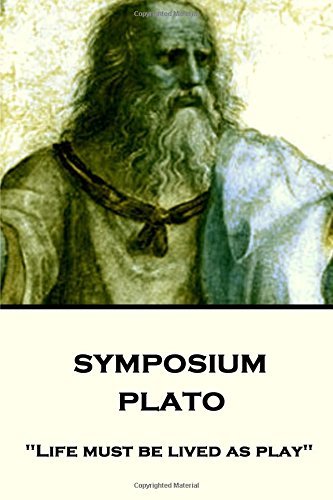
In Plato's "Symposium," a masterful dialogue set in the context of a banquet, profound conversations unfold as prominent Athenian thinkers gather to explore the nature of love—or "Eros." Each speaker presents a unique perspective, elevating love from mere physical attraction to a powerful driving force that inspires the pursuit of truth, beauty, and the divine. As the discussions become increasingly philosophical, readers are invited to contemplate the complexities of desire and the interplay between love, virtue, and wisdom. With its timeless themes and rich insights, this work not only captivates the intellect but also beckons us to reflect on our own experiences of love, making it a compelling must-read for anyone intrigued by the very essence of human connection.
Author Plato
Plato, an ancient Greek philosopher who lived from approximately 427 to 347 BCE, is widely regarded as one of the most pivotal figures in the history of Western philosophy. A student of Socrates and the teacher of Aristotle, he founded the Academy in Athens, one of the earliest institutions of higher learning in the Western world. Plato's works, primarily in the form of dialogues, explore a vast range of topics including ethics, politics, metaphysics, and epistemology, fundamentally shaping philosophical discourse and inquiry. His allegorical writing style, especially exemplified in texts like "The Republic" and "The Symposium," reveals his profound insights into the nature of love, beauty, and the ideal state. Through these dialogues, Plato not only honors his mentor Socrates but also constructs a compelling philosophical framework that continues to influence contemporary thought.
Plato - Symposium Summary |Free PDF Download
Plato - Symposium
Chapter 1 | the forms

Plato's "Symposium" and "Phaedo" are two of his most engaging dialogues, each exploring profound philosophical themes, namely the nature of love (eros) and the immortality of the soul. Their contrasting settings—one a lively party among the artistic elite, the other a somber last day spent in a prison cell—frame the dialogues' distinct moods. In the Symposium, guests partake in an intellectual exercise, delivering speeches on the concept of love, while in the Phaedo, the atmosphere is grave as Socrates discusses the afterlife with his devoted companions just before his impending execution. Throughout both dialogues, Socrates remains a beacon of calmness and philosophical insight, unperturbed by the events surrounding him. Both dialogues presuppose familiarity with what are known as the "forms," fundamental Platonic concepts that offer deeper understanding beyond the immediate sensory experience of the world around us. As humans, we perceive a myriad of unique, sensory particulars—no two roses, snowflakes, or objects are precisely alike. Yet, we intuitively categorize these particulars into classes, recognizing inherent universals such as "rose," "snowflake," "equality," and "beauty." This cognitive ability to discern and conceptualize universals is essential for thought, speech, and knowledge. Indeed, without this capacity, human existence would devolve into instinctual behaviors reminiscent of animal life, devoid of the rich complexity that characterizes human cognition. However, there exists a paradox in the nature of universals. While they are crucial for understanding and provide stability to our thinking, they lack physical existence. For instance, when observing two wooden rulers, we can intellectually acknowledge their duality and equality, but we cannot perceive these abstract qualities directly; they exist beyond the realm of physicality. This leads to a fundamental distinction: particulars belong to the "sensible" world, experienced through the senses, whereas universals inhabit the "intelligible" realm, comprehended through intellect. Further, particulars are inherently flawed and transient—constantly undergoing change, decay, or erosion over time. In contrast, universals are characterized by their perfection and timelessness, impervious to the changes that govern the material world. They embody eternal truths that remain unchanged despite the continuous transformation surrounding us. Thus, we can conclude that particulars are perceptible, imperfect, and ever-changing, whereas universals are imperceptible, perfect, and unchanging. A significant challenge arises when considering the relationship between these two realms. Universals enrich our understanding, yet they remain beyond sensory perception. We can conceptualize "catness," but the specific cat before us eludes that intellectual grasp as it eternally changes. This conundrum suggests a disjunction between knowledge and reality, leading to a philosophical impasse. Plato sought to bridge this divide through the theory of forms, which allows for the connection between the evolving particulars of the physical world and the static, eternal qualities of the intelligible realm. Forms serve as the intermediaries that solidify the relationship between our understanding and the observable universe, asserting that while particulars change, the understanding of universals as forms remains steadfast and foundational to human cognition.


Key Point: The Connection Between Universals and the Human Experience
Critical Interpretation: As you navigate through the complexities of life, consider how recognizing the universals—those abstract qualities like beauty, love, and truth—can cultivate a deeper appreciation for your experiences. Whereas the particulars of your day often shift and fade, the pursuit of understanding these eternal forms can provide you with a stable anchor in a world characterized by change and uncertainty, inspiring you to strive for ideals that transcend your immediate circumstances.
Chapter 2 | dialectic and myth
In contemplating the juxtaposition of our sensory experiences and the ordered truths revealed to us through intellectual understanding, we are compelled to acknowledge a significant and almost magical force at work—an idea posited by Plato regarding the nature of reality. This concept revolves around the existence of Forms, which he describes as timeless, invariable, and perfect universals that exist independently of our perceptions. Unlike mere ideas that might exist in our minds, these Forms are objective realities, existing whether or not there are conscious beings to recognize them. The traditional interpretation of Forms as "ideas" can, therefore, be misleading in contemporary discourse. 1. The Forms produce the tangible world around us, likening them to an original from which copies are derived. The myriad and fleeting particulars of our world are merely reflections—somewhat distorted shadows—of the eternal and unchanging Forms. For every conceivable universal, there exists a corresponding Form, and the particulars in our sensory world participate in these Forms in complex and variable ways, thereby creating the sensations we experience. It is essential to note that true knowledge is only attainable through the understanding of these intelligible Forms. Our souls, rather than our senses, are equipped for grasping this deeper knowledge. Conversely, our perception of the material world results in a kind of knowledge that Socrates refers to as "opinion," which stands in stark contrast to true understanding. 2. In the dialogues "The Symposium" and "The Phaedo," two methods arise for engaging with the concept of Forms: dialectic and myth. Dialectic, represented by Socrates' approach of question and answer, aims to unearth the truth. In "The Symposium," this method is juxtaposed with rhetoric, which tends to prioritize persuasion over truth. Through dialectic, Socrates not only illuminates the true nature of Love but also effectively counters the assertions of other speakers who, despite their eloquence, merely convey divergent opinions without arriving at substantive truths. In contrast, "The Phaedo" illustrates Socrates' portrayal of dialectic against a background of myth, presenting a more narrative-driven approach that invites exploration of deeper philosophical themes. This dialectic method serves as a beacon of understanding, guiding interlocutors towards grasping the essence of existence that transcends mere opinion, striving instead for a shared understanding of the eternal truths encapsulated in the Forms. Ultimately, the exploration of the relationship between the sensory world and the realm of Forms enriches our comprehension of reality and invites us toward a deeper intellectual pursuit of knowledge.
Key Point: Understanding the Nature of Reality through Forms
Critical Interpretation: Imagine for a moment the profound shift in your perception of reality when you embrace the idea of Forms—that timeless, perfect essence of all things existing beyond what your senses can grasp. This realization can inspire you to look beyond the surface of daily experiences and fleeting opinions, urging you to seek deeper truths that shape your life and the world around you. As you navigate through your thoughts and interactions, consider how much richer your understanding could become when you prioritize knowledge over mere opinion. Instead of settling for the shadows cast by your immediate experiences, you can aspire to engage in dialectic conversations that uncover those universal truths, transforming your quest for meaning into a beautiful journey towards enlightenment. Each dialogue, each moment of reflection, becomes a stepping stone toward grasping the essence of love, beauty, and truth that elevates your existence and leads to a more profound connection with others and the world.
Chapter 3 | greek homosexuality
In this chapter, the interplay between dialectic and myth in the pursuit of truth is explored, emphasizing their unique roles in our understanding and intuition. The text elucidates a nuanced relationship between observation and truth, arguing that while observation unveils facts, it falls short of revealing the underlying truths that govern these facts. It posits that dialectic, as an intellectual method, is essential for transitioning the mind from mere opinion to a deeper understanding of reality. 1. The Role of Dialectic: Dialectic serves as a critical tool that exposes the tension between perception and thought, illuminating the necessity for addressing this discrepancy. It functions to compel the mind to question superficial appearances and seek a more profound truth. However, the text articulates that reason alone cannot bridge the gap between perception and truth. 2. The Function of Myth: Myth plays a complementary role alongside dialectic. It aids in awakening the intuitive faculties of the soul, which are crucial for receiving revelations about the forms—essential truths that transcend ordinary experience. The practice of myth is twofold: it not only prepares the soul for receiving insights but also expresses the ineffable truths once revealed. Ordinary language is inadequate for conveying these transcendent insights; instead, metaphors, similes, and myths fill this expressive void, similarly reflecting the language of mystics and poets. 3. Preparation and Expression of Revelation: The chapter emphasizes that myth acts as both a preparatory mechanism and a vehicle for expression once the forms become apparent. Once individuals have been made receptive through myth, dialectic can then guide the contemplation of these forms, allowing for a direct engagement with ultimate truths. 4. Cultural Context—Greek Homosexuality: The text briefly touches on cultural attitudes towards love in classical Greece, particularly highlighting the prevalence of homosexual love among the Athenian leisure class. This cultural backdrop serves to illustrate the broader themes of love and desire that echo in the dialogues of Plato, showcasing the distinct nature of Athenian social dynamics, which differ sharply from modern perspectives on relationships. Through these elaborate explanations, the chapter reinforces the intricate relationship between reasoning, intuition, myth, and the cultural practices surrounding love, providing a multidimensional understanding of how we can arrive at deeper truths beyond mere observation.
Key Point: The Interplay of Dialectic and Myth
Critical Interpretation: This chapter highlights the transformative power of dialectic in your journey toward deeper understanding. Just as a sculptor chisels away at stone to reveal the form within, you are encouraged to question your initial perceptions and opinions, challenging yourself to think critically. By embracing this dialectical approach, you learn to navigate the complexities of truth, recognizing that direct observation may only capture a facade. It inspires you to seek richer, more profound meanings in your experiences and relationships, pushing you to look beyond the surface and engage with the deeper realities that shape your world. This invitation to pursue wisdom through dialogue and introspection can lead you to a more authentic and fulfilling life, granting you the clarity needed to discern not just what is true, but what is profoundly meaningful.




Scan to download

Chapter 4 | The symposium
The text explores the theme of love as articulated in Plato's "Symposium," focusing on the cultural context of ancient Greek relationships and the structure of the dialogue itself. The ideal love relationship in ancient Greece, particularly between an older man and a younger boy, was bound by strict conventions to maintain social acceptance. The older male, known as the "lover," was expected to pursue the younger male, the "loved one," showering him with gifts and attention while the younger boy remained modest and elusive. This homosocial dynamic was often seen as noble, in stark contrast to the perceived vulgarity of heterosexual relationships, which were primarily for procreation. The symposium, or drinking party, was a formal social gathering where intimate conversation flourished among a select group, often accompanied by entertainment. Central to the symposium were speeches praising Love, which served as philosophical explorations of its nature and significance. The dialogue unfolds in an indirect format, narrated by Apollodorus, who recounts the events of a previous symposium held years earlier. This layered narration emphasizes the complexities of communication and memory, suggesting that understanding is often a distorted reflection of reality. Throughout the dialogue, various participants offer differing perspectives on love. Phaedrus opens by framing love as a force that inspires virtue and courage, leading to self-sacrifice for one’s partner. Following him, Pausanias makes a more nuanced distinction between "common" and "heavenly" love, ultimately revealing a self-serving rationale for sexual relationships. Eryximachus elevates the discussion further by presenting love as a cosmic principle governing all of nature, while Aristophanes introduces a myth about the origins of love as a quest for wholeness lost in a primordial split. Agathon, the host, contributes a more superficial yet vibrant perspective, reducing love to a desire for beauty. However, it is Socrates, recounting the teachings of Diotima, who delivers the most profound insight. He describes love as a driving force towards an ultimate good, an ascending journey from physical attraction to the appreciation of beauty in the abstract form and ultimately to the realm of eternal truth. Diotima illustrates love as a ladder of desire leading the soul toward intellectual enlightenment—where love of beauty serves as the gateway to wisdom. The climactic expression of love as a quest for immortality adds depth to its portrayal, showing that true fulfillment lies in the pursuit of knowledge and the eternal forms rather than in mere physical connection. The final speech by Alcibiades, although a tribute to Socrates, reinforces this ambiguity, illustrating how Socrates embodies the very essence of love itself—passionate yet unattainable, wise yet always seeking. In essence, the "Symposium" examines love in its multifaceted forms, transitioning from utilitarian beginnings to a more profound understanding that positions love as a catalyst for philosophical inquiry and spiritual ascent. The dialogue ultimately suggests that the pursuit of love—and by extension, beauty and wisdom—serves not only personal fulfillment but also the transformative journey of the soul, making philosophers out of those who genuinely engage in the search for truth.
Key Point: Love as a transformative journey towards wisdom and truth.
Critical Interpretation: Imagine standing before a vast and infinite staircase, each step representing a different stage of understanding, a deeper level of connection with those around you. As you ascend, you realize that love is not merely a fleeting emotion tied to physical desire, but a profound and transformative force that guides you towards intellectual enlightenment and personal growth. Just as Socrates framed love as an ascending journey, let this perspective inspire you to seek out connections that challenge your intellect and expand your horizons. Each relationship, each moment of affection becomes an opportunity to discover new truths about yourself and the world, moving beyond superficial interactions towards deeper, meaningful connections that enrich your life and bring you closer to the essence of universal wisdom.
Chapter 5 | The phaedo
In Chapter 5 of "Plato - Symposium," the narrative draws significant attention to Socratic philosophy, particularly as it relates to the nature of death and the immortality of the soul as epitomized in the dialogue of the Phaedo. This chapter provides an intricate examination of Socrates' views on death as a transition rather than an endpoint, setting the discourse within a historical context leading up to his demise in 399 B.C. 1. The chapter opens with Socrates acting as a guide for young souls, leading them towards the eternal truth of beauty through the means of philosophical practice. His approach, though seemingly ambiguous or uncomfortable, aims to cultivate a deeper understanding of life and existence among his disciples, thus embodying the essence of Love in philosophical pursuits. 2. The Phaedo's structure allows for a comprehensive exploration of Socrates' final conversations with his followers. The dialogue unfolds in three principal segments, wherein Socrates defends his peaceful acceptance of death, presents four arguments supporting the soul's immortality, and shares a vivid myth describing the afterlife and the journey of the soul. 3. In defending his attitude towards death, Socrates asserts that true philosophers embrace death, considering it a release from the body's constraints, thus positioning life as a preparation for a more profound existence beyond. He posits that the philosopher seeks knowledge, which is inherently tied to the soul's detachment from the physical, making death an anticipated liberation rather than a feared finale. 4. Socrates faces challenges to his assertions, particularly from Cebes, who points out that the survival of the soul has yet to be proven despite Socrates’ claims. This confrontation leads to Socrates' construction of several arguments for the soul's immortality, the first of which leverages the concept of opposites. He argues that just as life and death are interdependent, the soul must be eternal, as it facilitates life and experiences death. 5. The second argument hinges on the "theory of recollection", proposing that innate ideas in humans, such as equality and beauty, stem from prior knowledge acquired by the soul in past existences. This assertion insinuates the soul’s preexistence but does not directly address whether it continues post-mortem. 6. Socrates’ third argument attempts to establish the soul's indissolubility, suggesting that its essence cannot be destroyed. Although this reasoning hinges on somewhat abstract premises related to the forms, it ultimately aims to affirm the soul’s longevity. 7. The dialogue encounters skepticism from listeners such as Simmias and Cebes, who present compelling counterarguments, eliciting a sense of confusion. However, Socrates adeptly counters these objections, reaffirming his perspective and weaving in autobiographical reflections that add a personal touch to his philosophical assertions. 8. The concluding argument revisits prior themes of opposites, though it lacks persuasive force compared to previous arguments. Following this analytical discourse, Socrates transitions into a captivating myth that evokes emotional resonance, illustrating the transcendental journey of the soul post-death. 9. The chapter culminates in Socrates' composed acceptance of his death, embodying the very principles he preached. His final moments encapsulate the interplay between rational thought and emotional conviction, culminating with a light-hearted farewell that leaves a lasting impression of his philosophical beliefs. Through these explorations, Chapter 5 paints a rich tableau of Socratic thought on death and immortality, urging readers to contemplate the complexities of existence and the philosophical pursuit of truth beyond mortal confines.
Chapter 6 | SPEECH OF PHAEDRUS
In this chapter of "Symposium," the discourse begins with Eryximachus proposing a series of speeches in praise of Love, following the earlier sentiments expressed by Phaedrus. The proposal is met with enthusiasm, setting the stage for a friendly and engaging competition among the attendees. 1. Phaedrus, as the first speaker, emphasizes Love's ancient and revered status, arguing that among gods and men, Love stands out because it is the first and without parents, a point corroborated by poets like Hesiod and thinkers like Parmenides. The essence of Phaedrus’ argument highlights Love’s profound influence on individuals and society, positing that it inspires noble behavior and serves as a guiding principle for living a beautiful and honorable life. 2. He ardently believes that the bond between lovers and the love of a good partner fosters an environment where individuals strive for excellence and virtue. Phaedrus argues that the fear of shame in front of a loved one is a powerful motivator, capable of instilling courage and resilience that surpasses even familial ties. The ideal scenario is presented—a community governed by lovers and beloveds, capable of unwavering loyalty and valor in battle, strongly suggesting that Love can unify and elevate human experience. 3. Citing examples from mythology, Phaedrus illustrates the nobility associated with Love, mentioning Alcestis, who sacrifices herself for her husband, contrasting her with Orpheus, whose lack of self-sacrifice for love leads to his diminished honor in the eyes of the gods. He invokes Achilles as a paragon of love and bravery, highlighting how his sacrifice for Patroclus exemplifies the ultimate honor accorded to acts of love. 4. Throughout his speech, Phaedrus asserts that the attachment formed through love not only drives personal sacrifice but also garners divine admiration, reinforcing the idea that Love is a significant and transformative force in both individual lives and wider society. This conception of Love as a powerful catalyst for unselfish acts and communal strength serves as a cornerstone for the subsequent speeches that follow, each deepening the collective understanding of this profound emotion. The undercurrents of camaraderie among the speakers set a tone of admiration for Love, inviting both reverence and reflection on its central role in the human experience. In this preliminary discourse, the seeds of philosophical inquiry into the nature of Love are sown, promising further exploration and rich insights as the evening unfolds.
Key Point: The transformative power of Love as a motivator for excellence
Critical Interpretation: Imagine standing before someone you cherish deeply, feeling that electric connection sparking a sense of purpose within you. In that moment, as Phaedrus argues, Love transforms you—it becomes the fire igniting your desire to rise to greatness, to showcase your best self not just for your own sake, but in the name of love. Whether it's conquering fears, pursuing ambitions, or making sacrifices that elevate not just your own life but the lives of those around you, love emboldens you to act nobly. This deep bond fosters a sense of community that stretches beyond individual relationships; it stitches a tapestry of shared courage and valor among all who embrace it. Let Love inspire you to step beyond your comfort zones, inviting you to strive for excellence in everything you do, reminding you that the path paved by affection is not merely personal—it's the very foundation of a vibrant and unified society.

Scan to download
1000+ Book Summaries, 80+ Topics
New titles added every week

Chapter 7 | SPEECH OF PAUSANIAS
In highlighting the essence of Love, particularly as perceived in the context of Plato's dialogues, Phaedrus initiates a discussion declaring Love as a powerful deity that motivates individuals toward excellence and happiness, elevating the lover above the beloved. This inherent divinity in lovers follows from the belief that their affections are often driven by deeper, divine inspiration, revered throughout mythological narratives, such as that of Achilles, who is honored by the gods. 1. Pausanias counters Phaedrus's simplification by asserting that Love is not monolithic; rather, it encompasses a duality represented by two distinct forms—Heavenly Love and Common Love, each linked to differing aspects of the goddess Aphrodite. The former is characterized by a profound appreciation of the mind and virtue, while the latter fixates on superficial attributes, leading lovers astray in their pursuits. 2. In his exploration of these two types of Love, Pausanias articulates that actions are only deemed beautiful or ugly based on the intent and the manner in which they are executed. Common Love, which manifests in base and indiscriminate desires, often leads to fleeting relationships devoid of lasting value. In contrast, Heavenly Love encourages lovers to seek not just physical companionship but intellectual and moral unity, fostering deeper connections. 3. Pausanias proposes a reflection on societal customs surrounding love, suggesting that virtues in loving relationships thrive under conducive societal norms. Where love can be practiced openly and freely, it flourishes and transforms individuals positively. Conversely, in societies where love is shamed or restricted, lovers may engage in deceitful or disingenuous behaviors, undermining the purity of their intentions. 4. A significant point raised is the idea that gratifying a lover is not inherently beautiful; instead, it hinges on the nature of the lover’s character. A relationship founded on shared pursuit of excellence enhances both parties involved. A lover motivated by virtuous intentions compels the beloved toward self-improvement and growth, enriching their bond. 5. The value of reciprocal appreciation in relationships, particularly the encouragement for the beloved to aspire toward personal cultivation, is vital. When both parties engage in this dance of mutual elevation, the act of loving becomes a noble pursuit—marked by trust and respect—validating the true beauty of their shared connection, and distinguishing it from base romantic entanglements that serve selfish ends. As the conversation progresses, Aristophanes seeks to contribute but is impeded by hiccups, prompting Eryximachus to kindly offer his assistance. This interlude serves to underscore the playful, yet meaningful interactions among friends that characterize the broader dialogue on Love, seamlessly connecting the themes of mutual assistance and shared experiences back to the discussion of virtues in relationships. Through these varied perspectives within the Symposium, Plato invites readers to contemplate the nature of love, its manifestations, and its profound influence on individual growth, communal values, and the pursuit of an enriched existence.
Key Point: The Pursuit of Heavenly Love Represents Growth and Excellence
Critical Interpretation: Imagine for a moment the transformative power of love in your life, not just as a fleeting emotion but as a force that invites you to strive for excellence. When you embrace the ideals of Heavenly Love, you’re not merely captivated by physical beauty; instead, you find yourself drawn to the virtues and intellect of another, fostering a connection that encourages both of you to grow. This sacred pursuit is about nurturing one another’s aspirations and supporting each other toward becoming your best selves. In recognizing that true love is about elevating each other, you can approach all your relationships—be they romantic, platonic, or familial—with an emphasis on mutual respect and shared goals. Every interaction then becomes an opportunity for personal cultivation, turning love into a noble endeavor that enriches your life and the lives of those around you.
Chapter 8 | SPEECH OF ERYXIMACHUS
In the eighth chapter of Plato's "Symposium," Eryximachus delivers a nuanced exploration of love, expanding upon earlier discussions by Pausanias. He argues that love transcends the realm of human relationships, influencing all aspects of existence, including medicine, agriculture, music, and even the natural world. Eryximachus emphasizes the duality of love, categorized into "Heavenly Love," which promotes order and virtue, and "Common Love," linked to more base desires. 1. Eryximachus begins by aligning his reflections on love with his profession as a physician, asserting that medicine embodies the principles of love through its aim to restore health and balance within the body. He illustrates that love manifests differently within a healthy body compared to a sick one. A successful doctor understands the distinction between the "beautiful love," which promotes health, and the "ugly love," which represents sickness or deterioration. This understanding allows for an appropriate application of love, ensuring that one nourishes the good and restrains the bad elements within the body. 2. The physician argues that this concept of love is not limited to medicine but extends to various fields. In music, for example, harmony emerges from the concord created among previously contrary notes, symbolizing how love can reconcile opposing forces. Rhythm similarly reflects the integration of differing elements, demonstrating that both disciplines rely on fostering a balance through love. 3. Eryximachus then connects the themes of love with the natural order, explaining that the changing seasons reflect the interplay of both types of love. When orderly love prevails, there is harmony and abundance; however, when chaotic or insolent love dominates, disorder manifests, leading to disease and disruption in nature. He notes that this duality can also be observed in astronomy, where the study of celestial phenomena reveals the influences of both types of love on earthly conditions. 4. The discourse culminates in an exposition on the importance of sacrifice and prophecy, which Eryximachus presents as essential practices that honor the divine and facilitate a harmonious relationship between gods and humans. He asserts that maintaining reverence for the orderly love over its contrary is crucial for achieving piety and justice, illustrating how love governs ethical conduct and interpersonal relations. 5. Conclusively, Eryximachus posits that true love holds immense power as it cultivates friendship and social bonds among people and with the divine. He celebrates love as a source of total happiness and fulfillment, a force that enhances the connections between individuals and their higher powers. In closing, Eryximachus acknowledges the depth of his reflections on love and encourages Aristophanes to elaborate or offer his perspective, thereby leaving the discussion open to further exploration and interpretation.
Key Point: The Power of Love in All Aspects of Life
Critical Interpretation: Imagine viewing love not solely as an emotion tied to romantic relationships, but as a transformative force that shapes every aspect of your existence. Eryximachus invites you to embrace this perspective, teaching that love extends beyond personal connections to impact your health, creativity, and even the natural world around you. When you foster 'Heavenly Love,' you cultivate order, harmony, and virtue within yourself and your surroundings, leading to a fulfilling life. Just as a physician seeks balance within the body, you can apply this principle to your own life—nurturing relationships, pursuing passions, and honoring the delicate balance of nature. Allow the radiant power of love to inspire you to create harmony in all your endeavors, reminding you that true happiness can be found in the connections you forge with others, the beauty you cultivate, and the divine qualities you strive to embody.
Chapter 9 | SPEECH OF ARISTOPHANES
In his engaging contribution to the Symposium, Aristophanes initiates a profound exploration of love, proposing that humanity's current experience of longing and desire is deeply rooted in our original, unified nature. Here, the key elements of his discourse unfold in a narrative that is both creative and philosophical: 1. Aristophanes begins by expressing concern for the power of Love, suggesting that if people truly recognized its significance, they would honor it with temples and sacrifices. He asserts that Love, the greatest ally of humanity, possesses the power to heal our emotional wounds. 2. To understand the essence of Love, he describes humanity's original form, which was whole and spherical, comprising three distinct sexes: male, female, and a third encompassing the attributes of both. These beings, possessing incredible strength, once threatened the gods, prompting a divine council to consider their fate. 3. Zeus, in his wisdom, devises a plan to split humans in half, thereby ensuring their humility and multiplying their numbers. This radical alteration results in a longing between the halves; each individual yearns for their counterpart as the severed halves seek to reunite and restore their original wholeness. 4. This division also necessitated anatomical adjustments. As Zeus gave humans external genitals and allowed conception to occur between partners rather than solely with the earth, he further established the bond of mutual love, which acts as a restoration of our original nature. 5. Aristophanes elaborates that each individual becomes a fragment searching for their “matching token.” He explains the connections between sexual preferences and the original forms, categorizing individuals into those who love women, men, or embody traits of both, emphasizing that these attractions stem from a longing for completeness. 6. The climactic moment in the speech illustrates the intensity of love. When two lovers embrace, they experience an indescribable desire to merge into one, a desire rooted in their original state of being. Their love transcends physical attraction, hinting at a deeper, ineffable connection. 7. As Aristophanes concludes, he contemplates the ideal of love: a return to unity. He urges listeners to recognize Love’s transformative power and to act reverently towards it, emphasizing that by seeking out their true counterparts, individuals can aspire to achieve happiness and fulfillment, thereby healing the wounds of their disunity. Through this intricate mythology of love and the human condition, Aristophanes weaves a rich narrative that invites reflection on the nature of our connections and our perpetual quest for wholeness. The portrayal of Love as a guiding force resonates across time, encapsulating the fundamental human experience of seeking relationships that restore and complete us.
Key Point: The transformative power of Love as a healing force.
Critical Interpretation: Imagine walking through life with the understanding that the love you seek is not merely an emotion, but a profound journey back to your original wholeness. Aristophanes invites you to recognize that within your longing, there lies an intrinsic part of your essence yearning to reunite with its counterpart. This realization can inspire you to approach relationships with a renewed sense of purpose, revering Love as a sacred force that not only enhances your happiness but heals the emotional wounds of separation. Through such a lens, every connection becomes an opportunity to discover and nurture that deep bond, empowering you to strive towards a state of fulfillment that transcends mere companionship and leads you on a path of profound personal growth and unity.
Scan to download
Chapter 10 | SPEECH OF AGATHON
In Plato's "Symposium," the dialogue unfolds with an invitation from Phaedrus to Agathon, urging him to deliver a speech in praise of Love. This initiates a series of profound reflections on the nature of love, beauty, and the qualities of the divine. 1. Agathon begins with a deliberate approach, noting that the previous speakers did not focus on the nature of Love itself but instead celebrated the effects it produces in humanity. He asserts that the right way to honor Love is first to understand the god's nature before discussing his gifts. He emphasizes that Love is the youngest and happiest of all gods, highlighting its aversion to old age and its association with youth and beauty. 2. In his poetic style, Agathon describes Love as gentle, flowing, and graceful. He illustrates Love's character through analogies that evoke beauty and softness, suggesting that Love resides in the gentlest and most refined aspects of both gods and men. He explicitly connects Love to justice, temperance, and courage, arguing that Love fosters the virtues shared among deities and humans alike. 3. Agathon elaborates on Love's wisdom, noting that the god imparts creativity, making poets of those who encounter Love. He claims that all arts and innovations stem from Love's influence, asserting that the accomplishments of gods and men arise from this divine inspiration. His speech culminates in a stirring tribute to Love's contributions to harmony, unity, and prosperity among people. 4. Following Agathon's eloquent address, Socrates expresses admiration for the speech but also his own trepidation regarding his forthcoming remarks. He aims to speak truthfully rather than superficially praising Love as Agathon has done. Socrates seeks to explore and dissect the very nature of Love, prompting Agathon with questions about whether Love is directed toward something or someone specific. 5. Through a series of logical inquiries, Socrates leads Agathon to acknowledge that Love necessarily implies a longing for something lacking. This insight reveals that to love is to desire what one does not have. Socrates presses further, insisting that if Love is the love of beauty, then Love itself must lack beauty. This logical progression challenges Agathon's earlier assertions about Love's attributes. 6. Ultimately, Socrates demonstrates that if Love is a longing for beauty and goodness, and if it lacks these qualities, then Love itself cannot be truly beautiful or good. Agathon, confronted with the rigor of Socrates’ reasoning, concedes that his prior claims may not align with the truth about Love. Through this dialogue, Socrates exposes the complexities of desire and elucidates the philosophical implications surrounding the concept of Love, laying a foundation for deeper exploration of the subject in later speeches. The discussion encapsulated in this chapter showcases the philosophical exploration of love, dissecting it not only as an emotion but as an essential force influencing moral virtues and artistic expression. Through Agathon's poetic eulogy and Socrates' probing inquiry, the dialogue invites readers to ponder the dual nature of love as both a source of beauty and a construct of desire, culminating in a profound understanding of its significance in human experience.
Key Point: Understanding the Dual Nature of Love
Critical Interpretation: Imagine standing amidst the complex tapestry of your emotions, where love isn't just a fleeting feeling but a deep-rooted longing intertwined with desire. This chapter inspires you to recognize love's dual nature as both a pursuit of beauty and a recognition of your own deficiencies. Just as Socrates guides Agathon to uncover that love stems from a yearning for what might be absent, you can find motivation in this understanding to embrace the gaps in your own life. This insight reminds you that each longing inspires growth, creativity, and the courage to seek deeper connections and meaning. By acknowledging that love can illuminate your shortcomings, you’re empowered to venture forth, transforming your desires into a path of personal development and connection with others.
Chapter 11 | SPEECH OF SOCRATES
In this segment from Plato's *Symposium*, Socrates recounts a profound conversation he had with Diotima, a wise woman from Mantinea, about the nature of Love. 1. The essence of Love: Socrates begins by indicating that he will clarify the nature of Love, one of the great gods, by discussing its characteristics and functions. Diotima challenges Socrates' understanding, suggesting that Love is not inherently beautiful or good. Instead, she posits that it occupies a middle ground between beauty and ugliness, knowledge and ignorance—a spirit guiding us in our interactions with the divine. 2. Diotima's explanation of Love's dual nature: She further explains that Love is conceived from the union of Resource and Poverty, signifying its perpetual desire for beauty and goodness, yet its inherent lack of them. This duality makes Love neither mortal nor divine, but a spirit that mediates between these realms, providing a means for communication between humans and gods. 3. The pursuit of good and immortality: Love is fundamentally the desire for good things, leading ultimately to happiness. Humans, Diotima argues, strive for immortality through reproduction, whether physical or intellectual. This desire drives men to create and leave a legacy—through children or intellectual contributions, thereby achieving a form of eternal existence. 4. The ladder of Love: Diotima introduces a metaphorical path or "ladder" of love, where one begins by appreciating physical beauty, progresses to recognizing the beauty of all bodies, and then ascends to the love of spiritual and intellectual beauty. Ultimately, the goal is to reach the understanding of the "beautiful itself," which embodies perfection and eternal truth. 5. The final revelation: The culmination of this ascent is the realization of pure beauty, which transcends all physical manifestations. Diotima asserts that true love is the desire not just for beauty but for the creation of that which contributes to immortality—whether through offspring or the enduring nature of knowledge and ideas. Throughout the discussion, Socrates expresses admiration for Diotima's insights, reinforcing the notion that Love is not merely a desire for beauty but a complex drive towards good, wisdom, and immortality. This philosophical exploration underscores the duality of human existence and the pursuit of eternal truths through relationships and intellectual endeavors. The chapter concludes with Socrates advocating for honoring Love as a guiding force in the quest for deeper understanding and fulfillment in life.
Key Point: The transformative power of Love as a guiding force toward a deeper understanding of life
Critical Interpretation: Imagine standing at the foot of a grand ladder, each rung representing a new understanding of beauty and love in your life. As you begin your ascent, you realize that Love isn't simply a longing for fleeting pleasures, but a profound drive urging you toward wisdom, goodness, and immortality. This idea compels you to not only seek connections that elevate you but also to create and leave a legacy, whether through nurturing relationships or sharing knowledge. Each step you take on this ladder guides you closer to an appreciation of life's deeper truths, transforming your experiences into a journey of profound fulfillment. By embracing Love's duality, you unlock a path where your desires can lead to personal growth and a lasting impact on the world around you.
Chapter 12 | SPEECH OF ALCIBIADES
In this rich dialogue from Plato's "Symposium," Alcibiades provides a detailed and vivid speech in praise of Socrates, framed by a playful yet profound exploration of love, admiration, and truth. As the discourse unfolds, several key themes emerge that deeply enrich the understanding of love and the nature of Socratic philosophy. 1. Truth and Humor in Praise: Alcibiades begins his oration by stating his intention to sincerely praise Socrates while humorously hinting at the absurdity of competing with sober minds after a drink. He likens Socrates to Silenuses—hollow figures that, upon opening, reveal divine miniatures inside—suggesting that Socrates, while appearing rough and unpolished, possesses inner wisdom and beauty that profoundly affects others. 2. Philosophical Influence: Alcibiades describes how Socrates’ words possess a transformative power similar to that of music, deeply affecting listeners. His eloquence awakens a passionate response in young men, compelling them to confront their own shortcomings and engage in philosophical pursuit. This idea elevates Socrates to a near-mythical status within Alcibiades’ narrative, suggesting that philosophy itself can elicit profound emotional responses. 3. Embarrassment and Admiration: As Alcibiades recounts his encounters with Socrates, he reveals a complex emotional landscape, marked by admiration, shame, and confusion. His attempts to seduce Socrates are met with rebuff, leading to feelings of humiliation juxtaposed against a deep respect for Socratic virtue. This interplay illustrates the tension between physical attraction and the pursuit of higher truth, emphasizing that true admiration transcends mere physicality. 4. Unique Virtue of Socrates: Alcibiades highlights Socrates' exceptional nature, contrasting him with ordinary men. Socrates’ ability to endure hardships, demonstrate moral courage, and possess steadfastness in battle sets him apart. Even in moments of vulnerability, like his famous thoughtfulness during battles, Socrates displays an unwavering commitment to virtue, distinguishing him as a unique figure in Alcibiades’ eyes. 5. Rejection and Reflection: The climax of Alcibiades’ speech captures his personal vulnerability, as he recalls a poignant moment of rejection where Socrates declines to reciprocate his affection in a conventional way. This rejection, rather than inciting anger, fosters a deep admiration for Socrates' temperance and philosophical integrity. Alcibiades’ struggle to reconcile his feelings for Socrates with the latter’s philosophical ideals is a compelling examination of the complexity of love and desire. 6. Cautionary Tale: Alcibiades warns others about the deceptive nature of appearances, noting that while Socrates may seem focused on physical beauty, it masks a more profound disregard for such superficiality. His experiences serve as both a personal lament and a broader caution against the pitfalls of unguarded emotional vulnerability in philosophical pursuits. Ultimately, Alcibiades' speech paints Socrates as a paradoxical figure—one who embodies both physical unappeal and inner divine wisdom, sparking a passionate quest for truth in those around him. By weaving together elements of humor, intense personal emotion, and philosophical reflection, Alcibiades crafts a multilayered portrayal that compels the audience to reconsider the true nature of love, beauty, and the journey toward self-excellence.
Scan to download
1000+ Book Summaries, 80+ Topics
New titles added every week